
Key takeaways
- Compare the best bead pond filters for backyard fish ponds by pond size, flow rate, and backwash design, with picks for ponds from 2,000 to 8,000 gallons.
What's inside
- What to look for in a bead pond filter
- 1. Aqua Ultraviolet Ultima II 2000 — for ponds up to 2,000 gallons
- 2. GC Tek AlphaONE 2.5 — true bead filtration for ponds up to 5,000 gallons
- 3. Aqua Ultraviolet Ultima II 6000 — for ponds from 4,000 to 6,000 gallons
- 4. Aquadyne 8000HE (Model 2.2BHE) — low-head bead filtration up to 8,000 gallons
- Comparison table
- Frequently asked questions
- Conclusion
As an Amazon Associate I earn from qualifying purchases. This post may contain affiliate links at no extra cost to you.
As an Amazon Associate, we earn from qualifying purchases made through links on this page.
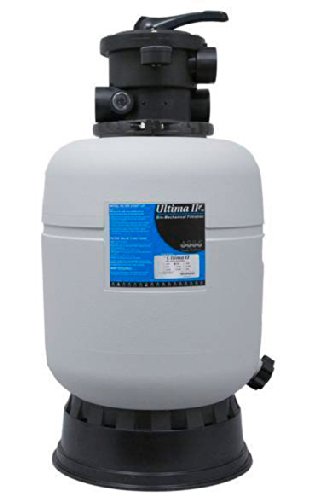

A bead filter is a sealed, pressurized tank packed with small plastic beads. Pond water is pumped through the bead bed, the beads trap fine debris, and their combined surface area hosts the beneficial bacteria that convert ammonia from fish waste into far less harmful compounds. When the bed loads up with solids, you turn a valve, agitate the beads, and flush the trapped waste out of a waste line. There is no foam pad to pull out and rinse by hand, which is why bead filters have become the default choice for stocked backyard fish ponds and koi ponds that need both mechanical polishing and biological filtration in one unit.
The four filters below cover backyard ponds from about 1,000 gallons up to 8,000 gallons. They come from the three manufacturers that dominate this category: Aqua Ultraviolet, GC Tek, and Aquadyne. Each pick lists the manufacturer’s own pond size limit, flow range, and backwash method, because those three numbers decide whether a filter will actually work on your pond. Two of the picks use true loose bead media with air-assisted backwashing. The two Aqua Ultraviolet models use that company’s patented ridged media in the same pressurized, valve-controlled format, with internal water jets doing the cleaning work that a blower does on the bead models. That media difference is flagged in each section so you know exactly what you are buying.
What to look for in a bead pond filter
Pond size limit and fish load. Every bead filter carries a maximum pond size from the manufacturer, and the honest ones also publish a fish load in pounds. A filter sized for 5,000 gallons of lightly stocked water garden will struggle on a 3,000-gallon pond packed with large koi, because waste production follows the fish, not the water volume. Match both numbers to your pond, and size up if you feed heavily.
Flow range. Bead filters only work inside a stated flow window. Below the minimum flow, the backwash cannot lift and clean the bed properly. Above the maximum, water channels through the media and filtration quality drops. Check that your pump’s output at your actual head height lands inside the filter’s window, not just the pump’s headline number.
Backwash mechanism. True bead beds pack down tightly, so most bead filters use an air blower to break the bed apart before flushing. GC Tek builds a blower into its AlphaONE design, and Aquadyne uses its Dynamax air system. Aqua Ultraviolet takes a different route: internal jets activated during the backwash cycle separate waste from its media, so no blower is involved. Blower systems clean a packed bead bed very thoroughly but add a powered component. Jet systems are simpler and have one less part to maintain.
Port size and plumbing. Smaller filters come with 1-1/2 inch or 2 inch valves. Larger filters are 2 inch only. Bigger ports mean less friction loss, which matters if you run a low-head, energy-efficient pump. Confirm the valve size matches your plumbing plan before ordering, because the same filter model often ships in both port sizes under different listings.
Footprint and height. These are tall pressure vessels, from about 33 inches to 46 inches in height. Measure your filter pit or equipment pad, including the clearance needed to turn the top valve and open the tank for media access.
Media volume. Media is sold by the cubic foot. A bigger bed holds more bacteria and goes longer between backwashes, which is why oversizing the filter is a common and sensible strategy on heavily stocked ponds.
1. Aqua Ultraviolet Ultima II 2000 — for ponds up to 2,000 gallons
See the Ultima II 2000 on Amazon
The Ultima II 2000 is the smallest filter in Aqua Ultraviolet’s line and the natural pick for a modest backyard fish pond. Aqua Ultraviolet sizes it for ponds from 1,000 to 2,000 gallons, with a minimum flow of 1,000 gallons per hour and a maximum flow of 2,500 gallons per hour. It is sold with either a 1-1/2 inch or a 2 inch valve, and the tank measures 16-1/2 inches in diameter and 33 inches tall in the 1-1/2 inch version, so it tucks into a compact equipment area more easily than most pressurized filters.
Instead of loose beads, the Ultima II line uses Aqua Ultraviolet’s patented ridged media. The manufacturer states that the dense bed of this media traps solids without clumping, and that internal jets switch on during the backwash cycle to separate waste from the media and push it out of the waste line. Cleaning is done by rotating the valve, with no blower to wire in and no bead bed to break apart manually. For a smaller pond where the equipment list is short and the owner wants a short weekly maintenance routine, that simplicity is the main attraction.
Who it fits: owners of water gardens and small koi ponds up to 2,000 gallons running a pump that delivers somewhere between 1,000 and 2,500 gallons per hour at the filter.
Limitations to know: the 2,500 gallon-per-hour ceiling is firm, so this filter cannot grow with a pond expansion. The media is proprietary to Aqua Ultraviolet rather than standard loose beads, so any future media replacement has to come from the same source. The two valve sizes are separate versions, so confirm which one a listing describes before you buy.
2. GC Tek AlphaONE 2.5 — true bead filtration for ponds up to 5,000 gallons
See the AlphaONE 2.5 on Amazon
The AlphaONE 2.5 is GC Tek’s mid-size bead filter, built around 2.5 cubic feet of bead media. GC Tek sizes it for ponds up to 5,000 gallons with fish loads up to 125 pounds, and flow-rates it at up to 70 gallons per minute, which works out to 4,200 gallons per hour. The tank stands 21 inches wide and 34.5 inches tall.
Two design details set the AlphaONE apart. First, the Omnifuser internals replace the slotted lateral pipes found in many pressure filters, so heavier solids settle to the lowest point of the tank and purge from the bottom during backwash instead of lodging in pipework. Second, the filter uses a 2 horsepower blower to agitate the bead bed before flushing, guarded by a clear union spring check valve, which is how a packed bed of true beads gets properly cleaned. GC Tek also builds in its ALISS life support system, an air supply intended to keep the bacteria in the bead bed alive during pump failures or medication shutdowns, when a sealed filter would otherwise go without oxygen.
Who it fits: koi keepers with ponds in the 2,500 to 5,000 gallon range and meaningful fish loads, who want genuine bead media and a blower-assisted backwash, plus protection for the bacteria colony during outages.
Limitations to know: the blower is a powered component that needs a weather-protected electrical supply at the filter pad. The 70 gallon-per-minute flow ceiling means very high-turnover pond designs will need a larger model from the line. At 21 inches across, it needs more floor space than the Ultima II 2000.
3. Aqua Ultraviolet Ultima II 6000 — for ponds from 4,000 to 6,000 gallons
See the Ultima II 6000 on Amazon
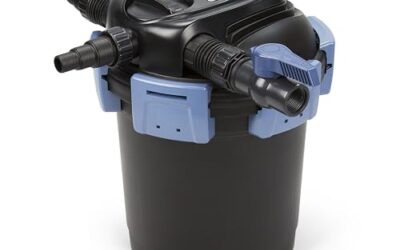
The Ultima II 6000 applies the same Aqua Ultraviolet formula at a larger scale. The manufacturer designs it for bodies of water from 4,000 to 6,000 gallons. Optimal flow is 6,000 gallons per hour, with a stated minimum of 3,000 gallons per hour and a maximum of 7,500 gallons per hour, and Aqua Ultraviolet recommends direct-drive self-priming pumps for this size. This listing is the version fitted with the 2 inch valve.
Backwashing works exactly as on the smaller Ultima II: internal jets activate during the cycle, separate the waste from the patented media, and send it out the waste line when you rotate the valve. There is still no blower. For a larger backyard pond, that means the weekly cleaning routine stays short even though the filter is moving a lot of water, and the parts list stays limited to the tank, the valve, and the pump.
Who it fits: owners of larger backyard ponds between roughly 4,000 and 6,000 gallons who already run, or plan to run, a strong external pump delivering at least 3,000 gallons per hour at the filter.
Limitations to know: the 3,000 gallon-per-hour minimum flow is the catch. A small or worn pump that cannot reach that floor will not backwash this filter effectively, so it is a poor match for gentle, low-flow pond designs. As with the 2000 model, the media is Aqua Ultraviolet’s own rather than loose beads, and replacement media is a single-brand purchase.
4. Aquadyne 8000HE (Model 2.2BHE) — low-head bead filtration up to 8,000 gallons

See the Aquadyne 2.2BHE on Amazon
The Aquadyne 8000HE, also sold under its classic model name 2.2BHE, is the largest filter in this roundup. Aquadyne sizes it for ponds up to 8,000 gallons carrying up to 165 pounds of fish. Inside the tank is 2.2 cubic feet of bead media weighing 80 pounds. The maker gives a pump range of 1,000 to 6,000 gallons per hour, and the tank measures 24 inches in diameter and 46 inches tall.
The HE in the name stands for high efficiency. The 2 inch multiport control head is machined to cut friction loss, and Aquadyne publishes a head pressure of only 0 to 1.5 psi at 4,000 gallons per hour on a clean, cycled filter, which is exactly what owners of low-head, energy-saving pumps need to see. Backwashing is handled by the Dynamax air system, which breaks up the loaded bead bed before flushing; Aquadyne states an average backwash uses about 50 gallons of water, a small loss on a pond of this size. A bottom sludge drain, a full 6 inch tank opening for media access, and three self-sealing 2 inch unions round out the specification.
Who it fits: owners of big backyard ponds, roughly 5,000 to 8,000 gallons, with heavy stocking, who want true bead media, gentle water use per backwash, and a filter that pairs well with efficient low-head pumps.
Limitations to know: at 46 inches tall before plumbing, it needs real vertical clearance in the filter area. Plumbing is 2 inch only. On a pond under about 3,000 gallons it is simply more filter than the job requires, and its wide pump range still assumes a pump that can push a proper backwash.
Comparison table
| Filter | Max pond size | Fish load | Flow range | Media | Backwash method | Ports |
|---|---|---|---|---|---|---|
| Aqua Ultraviolet Ultima II 2000 | 2,000 gallons | Not published | 1,000–2,500 GPH | Patented ridged media | Internal jets, valve rotation | 1-1/2 in or 2 in |
| GC Tek AlphaONE 2.5 | 5,000 gallons | 125 lbs | Up to 4,200 GPH (70 GPM) | 2.5 cu ft beads | 2 HP blower agitation | 2 in class plumbing |
| Aqua Ultraviolet Ultima II 6000 | 6,000 gallons | Not published | 3,000–7,500 GPH | Patented ridged media | Internal jets, valve rotation | 2 in |
| Aquadyne 8000HE (2.2BHE) | 8,000 gallons | 165 lbs | 1,000–6,000 GPH | 2.2 cu ft beads | Dynamax air-assisted | 2 in |
Frequently asked questions
How is a bead filter different from a pressurized foam filter?
A bead filter cleans water with a bed of small plastic beads or similar media inside a sealed tank, and it cleans itself by backwashing: agitate the bed, reverse the flow, and send the trapped solids out a waste line. A foam pressure filter traps debris in foam pads that you must remove and rinse by hand. On a stocked fish pond, the bead design handles far more waste with a much shorter routine, and the media bed doubles as the biological stage.
How often should a bead filter be backwashed?
During the feeding season, once a week is the common rhythm for a stocked backyard pond, and Aquadyne describes its own cleaning cycle as a five-minute weekly task. Backwash more often if the pond is heavily fed or the return flow visibly weakens, and less often in cold weather when feeding stops and waste production falls.
Does every bead filter need a blower?
No. Blowers appear on true bead filters such as the AlphaONE and the Aquadyne because a packed bed of beads has to be broken apart before it can be flushed clean. The Aqua Ultraviolet Ultima II models clean with internal water jets instead, so there is no blower in their design. Both approaches are manufacturer-supported; the difference is mechanical, not a quality ranking.
Can one of these filters run a koi pond on its own?
For most backyard ponds, yes, provided the filter is sized to the pond and the fish load, and the pump stays inside the filter’s flow window. Many keepers still add a skimmer or a pre-filter ahead of the bead filter to catch leaves and large debris before they reach the tank, and a UV clarifier after it if green water is a recurring problem. The bead filter itself covers the core mechanical and biological work.
What happens to the bacteria when the pump stops?
A sealed filter holds a large bacteria colony that needs oxygen. Short outages are normally tolerated, but long shutdowns are a real risk, which is why GC Tek builds the ALISS air supply into the AlphaONE line to keep the bed supplied with air during pump failures and medication shutdowns. If your power supply is unreliable, that feature is worth weighing.
Conclusion
For a small pond up to 2,000 gallons, the Aqua Ultraviolet Ultima II 2000 keeps the equipment list short and the cleaning routine shorter. Step up to a mid-size koi pond and the GC Tek AlphaONE 2.5 brings true bead media, a blower-assisted backwash, and bacteria life support for ponds up to 5,000 gallons. The Ultima II 6000 covers the 4,000 to 6,000 gallon range for owners with strong pumps who prefer jet cleaning over a blower. At the top end, the Aquadyne 8000HE pairs a full bead bed with a low-loss 2 inch head for ponds up to 8,000 gallons and heavy fish loads. Whichever size you choose, confirm the three numbers that matter before ordering: your pond’s gallons, your fish load, and your pump’s real output at head. A bead filter matched on all three will keep a backyard fish pond clear with a few minutes of valve work a week.
Related guides
More from Amazon
Programs that pair well with the guide above. Offers and eligibility are set by Amazon and may change.
Free shipping on eligible items, Prime Video and more. Eligible new members can start with a free trial.
Start a Prime free trialAudiobooks and podcasts to listen to on the go. Eligible new members can start with a free trial.
Try Audible freeAd-free music streaming. Eligible new subscribers can start with a free trial.
Try Music Unlimited freeA free business account with business pricing and bulk-buying tools for work, shop or home office.
Create a business accountAs an Amazon Associate we earn from qualifying purchases.
Write Your Review
No reviews yet. Be the first to share your experience!