
Key takeaways
- Compare the best pressurized pond filters for backyard fish ponds, from compact UV canisters to an 8,000-gallon unit, with sizing and cleaning advice.
What's inside
- Quick answer
- 1. TetraPond Bio-Active Pressure Filter BP1500 — best overall
- 2. OASE BioPress 1000 — best with UV for small ponds
- 3. Pondmaster ClearGuard 8000 — best for large ponds
- 4. VIVOHOME 1580 GPH Bio Pressure Pond Filter — best mid-size value with UV
- 5. Jebao CF-10 — best budget pick for small ponds
- How to choose
- Who should skip
- Frequently Asked Questions
- Final verdict
- Product and ASIN Reference
As an Amazon Associate I earn from qualifying purchases. This post may contain affiliate links at no extra cost to you.
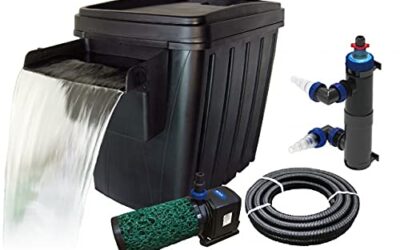
A pressurized pond filter sits in a sealed canister beside the pond, and that one design choice solves several problems at once. Because the water stays under pressure as it leaves the filter, you can run the outlet uphill to a waterfall, bury the canister up to its lid so it disappears into the planting, and clean the media with a backflush valve or a squeeze handle instead of lifting out armfuls of soaked foam. For a backyard fish pond, where space is tight and nobody wants a bulky filter box on show, that combination is hard to beat.


This guide compares five pressurized canister filters for backyard fish ponds, from a compact UV model for a small goldfish pond to a heavy-duty unit rated for 8,000 gallons. Every pick is a true pressure filter, every model is sized for fish rather than for a plant-only water feature, and the classes run from best overall through to a budget option for small ponds. Match the filter to your real fish load rather than to the headline gallon figure, and any of these five will keep the water clear and the fish healthy.
As an Amazon Associate, we earn from qualifying purchases.
Quick answer
The TetraPond Bio-Active Pressure Filter BP1500 is the best overall pressurized pond filter for most backyard fish ponds: it handles ponds up to 1,500 gallons, cleans with a backflush valve so you never open the lid, and uses open-profile bio-activator media that resists clogging. Choose the OASE BioPress 1000 instead if your pond is smaller and you want built-in UV for green water.
1. TetraPond Bio-Active Pressure Filter BP1500 — best overall
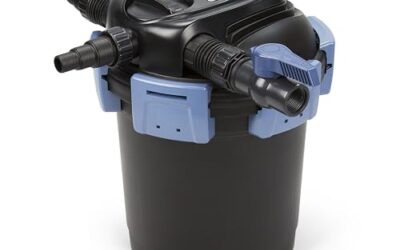
The BP1500 earns the top spot because it removes the two chores pond keepers dislike most: opening the filter and replacing clogged foam. Inside the sealed canister there are no foam pads at all. Water flows through a bed of open-profile plastic bio-activators that trap suspended debris while giving beneficial bacteria a large surface to colonize, and the open structure keeps flow moving instead of choking off as the media loads up.
Cleaning is a backflush. Turn the valve, and the reversed flow creates a whirlpool inside the media chamber that loosens trapped dirt and sends it out of the waste port, a job the manual puts at under two minutes. The lid stays shut, the bacteria stay put, and the filter goes back to work. The canister measures about 15.9 inches across and 18.75 inches tall, weighs roughly 9 pounds, and can be buried beside the pond to keep it out of sight.
Key specs:
- Pond size: up to 1,500 gallons
- Media: open-profile bio-activators, no foam pads
- Cleaning: backflush valve, no lid removal
- Pump range: 2,500 to 4,500 gallons per hour recommended; a minimum flow is needed for the backflush to work
- Fittings: accepts 1.25-inch and 1.5-inch tubing
- Warranty: two years
One honest limitation: there is no UV lamp in this model, so if your pond turns green every summer you will need a separate clarifier in the line. For ponds where the problem is debris and fish waste rather than algae bloom, the BP1500 is the most forgiving filter here.
2. OASE BioPress 1000 — best with UV for small ponds
The BioPress 1000 is the pick for a small pond that struggles with green water. It combines mechanical foam filtration, biological media, and a built-in 7-watt UVC lamp in one compact canister, so suspended algae are dealt with inside the same unit that traps debris. OASE rates it for ponds up to 1,000 gallons with a light fish load, and its own sizing chart puts the working figure at about 500 gallons for a medium fish load and 250 gallons for a heavy one, which is the honest way to size any filter in this class.
Maintenance is the other reason to buy it. A cleaning handle on the lid connects to the internal foams, so you work the handle up and down to squeeze them clean without opening the canister or touching the media. All the controls sit on the lid, which means the canister body can be buried in the ground beside the pond and only the top shows. At about 8.9 by 13.2 inches it is also the smallest footprint in this guide.
Key specs:
- Pond size: up to 1,000 gallons light load; about 500 gallons medium load; about 250 gallons heavy load
- UV: built-in 7-watt UVC lamp
- Cleaning: lid handle squeezes the foams, no opening required
- Installation: canister can be buried up to the lid
- Cable: 10-foot power cord
- Media: filter foams plus included bio-media
If your pond is a small goldfish setup in full sun, this is the most complete single box you can buy for it. Koi keepers should size up to the larger classes below instead.
3. Pondmaster ClearGuard 8000 — best for large ponds

Most pressurized filters top out at a few thousand gallons. The ClearGuard 8000 is built for the ponds those models cannot serve, with an 8,000-gallon capacity, a heavy-duty poly canister rated to 15 PSI, and a seven-function valve head that covers filter, backwash, rinse, winterize, empty, circulate, and close. That valve is the heart of the unit: seasonal jobs that mean replumbing a smaller filter are a quarter-turn here.
Inside, Danner pairs its Bio-Matrix biological media with a reusable foam pad that polishes out fine debris, so the one canister handles both the biological load of a big fish population and the mechanical load of a large, leafy backyard. The fittings accept both PVC slip and barbed hose connections, the canister can be buried for a discreet install, and Danner rates it for pumps up to 8,000 gallons per hour. An optional backwash air kit can be added to agitate the media during cleaning.
Key specs:
- Pond size: up to 8,000 gallons
- Media: Bio-Matrix bio-media plus reusable foam polishing pad
- Valve: seven functions including backwash, rinse, and winterize
- Pressure rating: 15 PSI maximum
- Fittings: PVC slip and barbed hose connections
- Installation: can be buried; optional backwash air kit available
There is no UV lamp in this configuration, and at this size the pump and plumbing matter as much as the filter. For a large koi pond that has outgrown consumer-grade canisters, it is the strongest step up that still works like a backyard filter rather than a pool system.
4. VIVOHOME 1580 GPH Bio Pressure Pond Filter — best mid-size value with UV
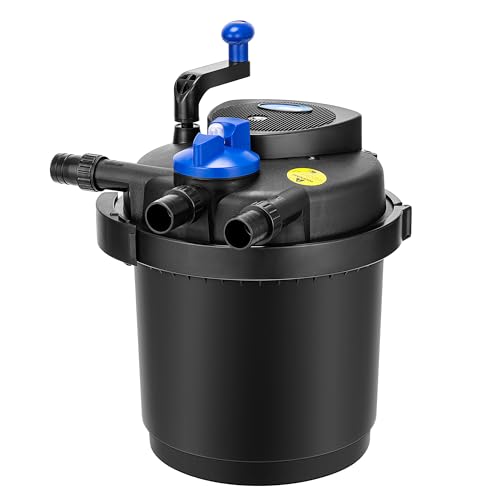
VIVOHOME’s pressure filter is the straightforward middle path: a sealed bio canister with a built-in 13-watt UV lamp and a rated flow of 1,580 gallons per hour, aimed at the small to mid-size backyard ponds that make up most of the hobby. Water passes through filter sponges that catch debris and on through bio media where bacteria handle fish waste, while the UV lamp works on the suspended algae that turn water green.
The design follows the pattern that makes pressure filters easy to live with. The canister can sit beside the pond or be partly buried, the outlet can feed a waterfall or stream because the water leaves under pressure, and a cleaning function lets you flush accumulated waste out of the unit rather than dismantling it. Stepped hose tails cover the common tubing sizes used on backyard ponds, so it drops into most existing pump setups without a plumbing project.
Key specs:
- Flow rating: 1,580 gallons per hour
- UV: built-in 13-watt lamp
- Filtration: sponge mechanical stage plus biological media
- Cleaning: built-in flush function
- Installation: sealed canister, can be partly buried, outlet can run uphill to a waterfall
Choose this one if your pond is beyond the BioPress 1000’s comfortable range, you want UV included rather than added later, and you would rather put the savings toward a stronger pump, which is where mid-size ponds usually gain the most.
5. Jebao CF-10 — best budget pick for small ponds

The CF-10 covers the full feature list of a modern pressure filter at the lowest commitment in this guide. It is a sealed canister rated for ponds up to 1,000 gallons with a normal fish load, with three stages inside: two foam discs that catch debris, a bed of bio-balls at the base for bacteria, and a 13-watt UVC lamp behind a quartz sleeve that clumps suspended algae together so the foams can remove it.
A selector on the lid switches between work and clean modes, so routine maintenance is a backwash rather than a teardown, and when a deep clean is due the foams rinse in pond water to protect the bacteria. The canister measures about 10 by 10 by 15 inches and weighs around 12 pounds, small enough to tuck behind planting or partly bury with the lid clear of the waterline. This listing is sold as a kit with a matched 528 gallon-per-hour pump included, which suits a first pond build where no pump exists yet.
Key specs:
- Pond size: up to 1,000 gallons at a normal fish load
- UV: built-in 13-watt UVC lamp with quartz sleeve
- Media: two foam discs plus bio-balls
- Cleaning: work and clean selector with backwash
- Size: about 10 by 10 by 15 inches, roughly 12 pounds
- Kit: matched pump included in this listing
The trade-offs are the ones you would expect at this level: a smaller media volume than the TetraPond or OASE, and a lamp that needs replacing on a yearly cycle to keep its output up. For a small pond on a budget, the coverage is genuinely complete.
How to choose
Begin with fish load, not pond volume. Manufacturers headline the largest pond a filter can handle with few or no fish, and every maker in this guide quietly publishes a much smaller figure for a heavy load. A 1,000-gallon koi pond needs a filter from a larger class than a 1,000-gallon goldfish pond, and a larger class than a same-size pond with plants alone. When in doubt, buy the next size up; an oversized pressure filter simply needs cleaning less often.
Decide whether you need UV. A UV lamp only treats suspended algae, the green-water problem. It does nothing for string algae on rocks, and it is not a substitute for biological capacity. If your water is clear but tests show ammonia, you need media volume, not watts. If your pond turns to pea soup each spring, a built-in lamp like the ones in the OASE, VIVOHOME, and Jebao picks saves adding a separate clarifier later.
Match the pump to the filter, not the other way round. Pressure filters restrict flow, and the TetraPond manual warns that output through the filter drops substantially compared with the pump’s open rating. Every filter here also has a flow window: too little flow and the backflush will not clean properly, too much and you stress seals and media. Check the recommended pump range for the model you choose and size the pump to land inside it after the filter’s restriction.
Finally, think about where the canister will live. All five picks can sit beside the pond, and most can be buried up to the lid for a hidden install. Burial is the single biggest aesthetic advantage of a pressure filter over a gravity box, so plan the hole, the hose runs, and a waste route for backflush water before the filter arrives.
Who should skip
Skip pressurized filters entirely if your pond is a large, heavily stocked koi setup beyond about 8,000 gallons; at that point a dedicated bead filter or a drum and moving-bed system will serve the fish better than any canister here. Skip them, too, if you want filtration you can gravity-feed from a bottom drain, since a pressure canister needs a pump pushing water into it and belongs on the pressure side of the circuit.
Skip the UV models if your pond is shaded and has never had green water; the lamp, its yearly replacement, and its power draw buy you nothing. And skip the two 1,000-gallon picks if your pond is anywhere near that size with koi in it — their heavy-load ratings are a fraction of the headline figure, and an undersized filter means constant cleaning and stressed fish.
Frequently Asked Questions
Can a pressurized pond filter run a waterfall?
Yes, and this is one of the main reasons to choose one. Because the water leaves the canister still under pressure, the outlet can be plumbed uphill to a waterfall or stream without the flow dying on the way. A gravity box filter has to sit above the waterfall and drain back by gravity, which is why pressure filters are so much easier to hide.
How often does a pressure filter need cleaning?
With a backflush model, plan on a short backflush every one to two weeks in the growing season and less often in winter, adjusted for how quickly the flow slows. The routine takes minutes and does not involve opening the unit. A deeper clean, with the lid off and the foams rinsed in pond water, is usually a once or twice a season job.
Does a UV lamp replace biological filtration?
No. The lamp only clumps together suspended algae so the mechanical stage can remove it; it does not process ammonia or nitrite from fish waste. That work is done by bacteria living on the bio media, which is why media volume and a mature filter matter more to fish health than lamp wattage.
Can I bury a pressurized pond filter?
Most models in this guide can be buried up to the lid, because all the controls, valves, and cleaning handles sit on top. Leave the lid and hose connections accessible, keep electrical parts such as a UV ballast dry and above ground, and run the backflush waste line somewhere the dirty water can drain away, such as a garden bed.
Final verdict
For most backyard fish ponds, the TetraPond Bio-Active BP1500 is the filter to buy first: honest sizing, a media bed that resists clogging, and a backflush that makes cleaning a two-minute valve turn. Add the OASE BioPress 1000 if your pond is small and green water is the enemy, step up to the Pondmaster ClearGuard 8000 when the pond outgrows consumer canisters, and look at the VIVOHOME and Jebao CF-10 when value matters more than brand. Size by fish load, keep the pump inside the filter’s flow window, and a pressure canister will keep a backyard pond clear with very little of your weekend.
Product and ASIN Reference
| Product | ASIN |
|---|---|
| TetraPond Bio-Active Pressure Filter BP1500 | B001QIPL36 |
| OASE BioPress 1000 Pressurized Filter with UV | B07G4JW4KF |
| Pondmaster ClearGuard 8000 Pressurized Pond Filter | B00F9H7ZLQ |
| VIVOHOME 1580 GPH Bio Pressure Pond Filter with 13W UV | B07Y1FYJGC |
| Jebao CF-10 Bio Pressure Pond Filter | B00B9MNL0E |
Related guides
More from Amazon
Programs that pair well with the guide above. Offers and eligibility are set by Amazon and may change.
Free shipping on eligible items, Prime Video and more. Eligible new members can start with a free trial.
Start a Prime free trialAudiobooks and podcasts to listen to on the go. Eligible new members can start with a free trial.
Try Audible freeAd-free music streaming. Eligible new subscribers can start with a free trial.
Try Music Unlimited freeA free business account with business pricing and bulk-buying tools for work, shop or home office.
Create a business accountAs an Amazon Associate we earn from qualifying purchases.
Write Your Review
No reviews yet. Be the first to share your experience!