
Key takeaways
- Compare tracked snow blowers with adjustable discharge chutes for steep, icy driveways, including track modes, chute rotation and clearing width.
What's inside
As an Amazon Associate I earn from qualifying purchases. This post may contain affiliate links at no extra cost to you.
Tracked machines solve a different problem from wheeled models: keeping grip on a sloped, icy, or gravel driveway while the auger is biting into packed snow. The harder decision is chute control, because a blower that climbs well but throws snow back across the cleared path wastes every pass. Buyers need track traction and a discharge chute they can redirect without stopping.

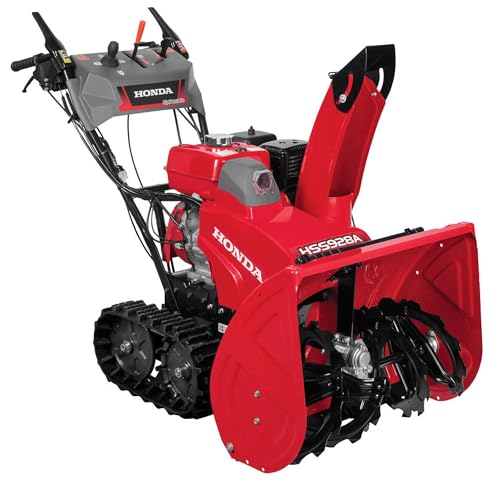
This guide is for homeowners with inclines, long rural drives, and end-of-driveway piles left by plows after every storm. Both picks are two-stage tracked snow blowers selected from their Amazon listing names and specifications: the Ariens Platinum RapidTrak 28 SHO and the Honda HSS928, each with adjustable chute control for direction and distance. Only two models verified cleanly to that standard, so the guide keeps both rather than padding the list with wheeled machines.
Quick Picks
As an Amazon Associate we earn from qualifying purchases
| Product | Best for | Key spec from title |
|---|---|---|
| Ariens Platinum RapidTrak 28 SHO | Sloped driveways needing three track positions | 28-inch clearing width, 369cc engine |
| Honda HSS928 (HSS928AATD) | Long drives needing a long throw from the chute | 28-inch clearing width, 52-foot max throw distance |
How to Choose
Track System and Driveway Slope
Tracks spread machine weight over a longer contact patch than tires, which matters most when a driveway tilts or carries a sheet of ice under fresh snow. Look closely at how the track system adjusts: the Ariens RapidTrak lists three positions covering regular track use, easier wheeled-style maneuvering, and a dig-in setting for deep or slippery conditions. A fixed track setup can still grip well, yet adjustable positions help when part of the route is flat pavement and another part climbs. Match the system to your steepest section rather than to the easiest stretch, and remember that track grip also steadies the housing when the auger meets a frozen ridge.
Chute Rotation and Deflector Control
An adjustable discharge chute has two separate jobs: rotation decides direction, while the deflector decides how high and far the stream travels. Check the listing for both controls, not just a rotating chute claim. Quick-turn rotation through a wide arc lets you swing discharge from one side of a wide drive to the other without backtracking. A remote or dash-mounted deflector lever is equally valuable beside fences, parked cars, and house walls, where a shorter, lower throw prevents snow landing where you have already cleared or against windows. Controls reachable from the operator position matter most in wind, when discharge direction may need correcting several times during one pass.
Clearing Width and Intake Height
Width determines how many passes a driveway takes, but it also decides whether the machine fits through gates and between parked vehicles. Both models here clear 28 inches per pass, a practical middle ground for two-car driveways. Intake height matters when storms stack snow above the housing or a plow leaves a dense ridge at the street entrance. The Honda listing gives an ideal snow depth figure of 21.7 inches, which helps gauge drift work. Measure your narrowest gap before choosing, because a wider housing that cannot reach a side path helps nobody. Also check turning space at the end of the drive, since tracked machines pivot differently from wheeled ones in confined aprons.
Engine Size and Starting Method
Engine displacement signals how comfortably a two-stage machine chews wet, compacted snow rather than light powder. The listings here span 270 cubic centimeters for the Honda and 369 cubic centimeters for the Ariens, both four-cycle gas designs. Electric start deserves attention if the blower lives in an unheated garage and must fire on the coldest morning of the year. Also consider storage footprint and weight before ordering, since tracked machines are heavy to reposition by hand. Confirm fuel type, starting gear, and delivery arrangements in the listing before committing, and plan where a machine of this size will sit during the off-season months.
The 2 Best Options
Ariens Platinum RapidTrak 28 SHO
Choose this Ariens when your driveway mixes flat pavement with a genuine incline and you want track behavior you can change mid-job. Its RapidTrak system lists track mode, wheel mode, and dig-in mode, so traction and maneuverability can shift with conditions underfoot. The 369cc four-cycle engine and 28-inch clearing width suit wide residential drives and deeper accumulations. Heated handgrips and LED headlights from the listing description support early-morning clearing, while the chute control documented for this model rotates the discharge direction so snow lands away from finished passes.
Specs
- Brand: Ariens
- Power source: Gas powered
- Engine type: 4 cycle
- Engine displacement: 369 cubic centimeters
- Clearing width: 28 inches
- Ideal snow depth: 28 inches
- Item weight: 283 pounds
- Dimensions: 60 x 30 x 46 inches
- Color: Red with black accents
- Track system: RapidTrak with three adjustable track positions
Best for: Sloped or mixed-surface driveways where track grip and easier turning are both needed.
Watch out for: Confirm the seller and delivery terms before ordering, since the Amazon listing notes this item is non-returnable under hazardous materials transportation rules.
ASIN: B0FF4QF4ML
Honda HSS928 (HSS928AATD)
Pick the Honda when a long driveway rewards maximum throwing distance and you prefer a track-drive machine built around electric start convenience. The listing title highlights track drive, self-propelled operation, and clearing capacity up to 1,900 pounds per minute, paired with a 52-foot maximum throwing distance. Its 270cc four-cycle gasoline engine and 28-inch clearing width fit larger residential properties without moving to the widest housing class. For chute placement, this model family uses joystick-style chute control, letting the operator redirect discharge while continuing along the drive rather than stopping at every corner.
Specs
- Brand: Honda
- Model number: HSS928AATD
- Power source: Gasoline-powered
- Engine type: 4 cycle
- Engine displacement: 270 cubic centimeters
- Clearing width: 28 inches
- Ideal snow depth: 21.7 inches
- Maximum throw distance: 52 feet
- Color: Red
Best for: Long, open driveways where a longer throw keeps discharged snow clear of the path.
Watch out for: Verify the exact model code HSS928AATD on the listing before ordering, because Honda sells closely related HSS928 variants with different starting and drive details.
ASIN: B01JJ5DC8S
Which One Fits Your Situation
A Steep Driveway With Ice Under Snow
Start with the Ariens Platinum RapidTrak 28 SHO. Its dig-in track position is aimed at deep and slippery conditions, and switching back toward wheel mode eases turning on flatter ground near the garage. The wider engine displacement also suits packed snow that has frozen overnight. If your slope is the main reason for buying tracks at all, this adjustable system gives you more than one way to handle it across a single clearing session.
A Long Rural Drive With Room to Throw
The Honda HSS928 fits properties where discharged snow can travel far without hitting buildings or landscaping. A 52-foot maximum throw and the listed clearing capacity support steady progress along extended runs. Joystick-style chute control helps when the drive bends, because direction changes happen from the operator position. Choose it when distance matters more than switching track modes, and when electric start convenience on cold mornings ranks high on your list of everyday priorities.
A Two-Car Suburban Driveway With Tight Edges
Either machine clears 28 inches, so the deciding factor becomes chute placement near fences, cars, and the house. The Ariens pairs quick chute rotation with a deflector control for shortening the stream beside obstacles. The Honda offers joystick chute direction for corners and gate areas. Walk your route first, note where snow can legally and safely land, then pick the control layout that matches those tight spots rather than chasing extra width you cannot use.
Deep Drifts and Plow Ridges at the Street
Dense ridges demand traction first, because a spinning contact patch stalls progress before chute settings matter. The Ariens dig-in position and larger displacement make it the natural first look here, while its 28-inch ideal snow depth listing matches taller accumulations. The Honda remains credible for ridges along an otherwise long, open drive. Whichever you choose, plan several shallow bites at the ridge instead of forcing the full housing into compacted snow in one push.
Common Mistakes
- Buying a wheeled model for a steep driveway and discovering the tires slip once ice forms under fresh snow.
- Checking chute rotation but ignoring the deflector, then throwing snow too high or too far near houses and cars.
- Choosing a housing wider than the narrowest gate or gap, leaving side paths and walkways to shovel work anyway.
- Forgetting delivery and returns conditions for heavy freight items, which can differ sharply from ordinary parcel purchases.
- Storing a tracked blower without planning how it will be moved, since these machines are heavy to reposition by hand.
Frequently Asked Questions
Why choose tracks instead of wheels on a snow blower?
Tracks keep a longer contact patch on the ground, which improves grip on slopes, ice, and loose gravel where tires can spin or dig in. That stability also helps the auger housing stay planted in packed snow. The tradeoff is weight and slower repositioning by hand, so tracks make most sense when your driveway surface or incline genuinely punishes wheeled machines during a normal winter.
What does an adjustable discharge chute actually adjust?
Two things change: rotation swings the chute left or right to pick a direction, and the deflector tilts to control height and distance. Both adjustments matter on real driveways, because direction alone cannot stop snow overshooting a narrow landing zone. Look for listings that describe rotation and deflector control separately, since a chute that only rotates still leaves you guessing about throw distance beside fences and parked cars.
How wide should a tracked snow blower be for a home driveway?
A 28-inch clearing width, shared by both models in this guide, balances pass count against maneuverability for typical two-car driveways. Wider housings reduce passes on open ground yet struggle through gates and between vehicles. Measure the narrowest point on your full clearing route, including side paths, and let that measurement cap your choice. A machine that covers the whole route beats a wider one that leaves awkward strips behind.
Can a tracked two-stage blower handle a gravel driveway?
Yes, provided the auger housing height is set so the scraper bar rides above loose stone instead of scooping it into the chute. Track traction helps on gravel because the machine resists slipping sideways on the uneven surface. Work slowly on the first pass of the season, check what the discharge stream carries, and adjust housing height before continuing. Throwing gravel damages property and quickly dulls the clearing edge.
Related guides
More from Amazon
Programs that pair well with the guide above. Offers and eligibility are set by Amazon and may change.
Free shipping on eligible items, Prime Video and more. Eligible new members can start with a free trial.
Start a Prime free trialAudiobooks and podcasts to listen to on the go. Eligible new members can start with a free trial.
Try Audible freeAd-free music streaming. Eligible new subscribers can start with a free trial.
Try Music Unlimited freeA free business account with business pricing and bulk-buying tools for work, shop or home office.
Create a business accountAs an Amazon Associate we earn from qualifying purchases.
Write Your Review
No reviews yet. Be the first to share your experience!