
Key takeaways
- Compare five webcams for home offices, video calls and streaming, from a dependable 1080p starter to a sharp 4K premium pick. Choose with confidence.
What's inside
As an Amazon Associate I earn from qualifying purchases. This post may contain affiliate links at no extra cost to you.
- Top Pick: Logitech C920x HD Pro
- Runner-up: Anker PowerConf C200 2K
- Also consider: Logitech C922x HD Pro
A good webcam changes how you come across on a video call. Built-in laptop cameras often sit at a poor angle, struggle in dim rooms, and soften fine detail, so colleagues see a grainy image even when your connection is fine. A dedicated webcam puts the lens at eye level, sharpens your face, and usually adds better microphones.
The right choice depends on how you will use it. A simple 1080p camera is enough for most daily calls, while streamers benefit from smoother frame rates and stronger low-light handling, and anyone who records or presents regularly may value 4K detail and a wider choice of framing. This guide compares five webcams, from a dependable budget starter to a premium 4K model.
As an Amazon Associate, we earn from qualifying purchases.
Quick Answer
For most home offices, the Logitech C920x is the sensible starting point: sharp 1080p video, autofocus, and dual microphones at a budget-friendly position. Step up to the Anker PowerConf C200 for 2K detail, the Logitech C922x or Razer Kiyo Pro for smoother streaming, or the Logitech Brio 4K for premium image quality and Windows Hello sign-in.
Table of Contents
- Quick Answer
- 1. Logitech C920x HD Pro
- 2. Anker PowerConf C200 2K
- 3. Logitech C922x HD Pro
- 4. Razer Kiyo Pro
- 5. Logitech Brio 4K
- How to Choose a Webcam
- Who Should Skip a Dedicated Webcam
- Frequently Asked Questions
- Final Verdict
- Product and ASIN Reference
1. Logitech C920x HD Pro

The Logitech C920x HD Pro is the classic home-office webcam, and a strong default for people who mainly join video calls. It records Full HD 1080p video at 30 frames per second through a five-element glass lens, with autofocus and a 78-degree field of view that frames one person comfortably. RightLight 2 light correction adjusts exposure in dim rooms, and two omnidirectional microphones capture stereo sound. It clips to a monitor or laptop lid, connects over USB, and works with Microsoft Teams, Google Meet, and Zoom. A three-month XSplit VCam license is included for blurring your background. Note that it has no built-in privacy shutter.
Specs
| Specification | Detail |
|---|---|
| Resolution | Full HD 1080p |
| Frame rate | 30 fps at 1080p |
| Field of view | 78 degrees diagonal |
| Focus | Autofocus |
| Microphones | Two omnidirectional microphones |
| Light correction | RightLight 2 automatic light correction |
| Connection | USB |
| Privacy shutter | No |
2. Anker PowerConf C200 2K
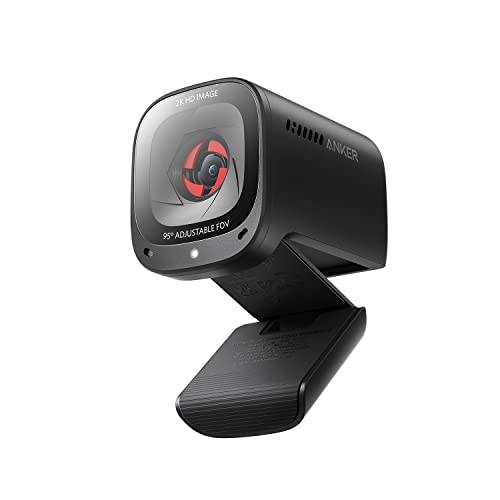
The Anker PowerConf C200 2K is a compact step up from basic 1080p cameras, for anyone who wants a visibly sharper image without moving to 4K. It captures 2K video at 30 frames per second, which means 2560 x 1440 resolution. A 5-megapixel CMOS sensor sits behind an autofocus lens. Through the AnkerWork software you can choose a 65, 78, or 95-degree field of view, so you can frame a tight head-and-shoulders shot or widen the view when a colleague joins you. Low-light correction helps in dimmer rooms, and a built-in privacy cover slides over the lens. Dual stereo microphones with AI noise cancelling reduce background sound, and Anker lists an 18-month warranty.
Specs
| Specification | Detail |
|---|---|
| Resolution | 2K, 2560 x 1440 |
| Frame rate | 30 fps at 2K, 1080p, and 720p |
| Field of view | 65, 78, or 95 degrees, adjustable in software |
| Focus | Autofocus |
| Sensor | 5-megapixel CMOS sensor |
| Microphones | Dual stereo microphones with AI noise cancelling |
| Connection | USB-C on camera, USB-C to USB-A cable included |
| Privacy shutter | Yes, built-in sliding cover |
3. Logitech C922x HD Pro

The Logitech C922x HD Pro builds on the C920x formula and adds the feature streamers ask for most: smoother motion. It records Full HD 1080p at 30 frames per second, and it can also record HD 720p at 60 frames per second, which makes gestures and gameplay look noticeably smoother on a live stream. It has a 78-degree diagonal field of view, a glass lens with autofocus, HD light correction, and two omnidirectional microphones. The listing notes a five-foot cable and USB-A plug-and-play connection. A three-month premium XSplit license is included for removing or replacing your background, and its universal clip fits a monitor or laptop lid, with a tripod thread underneath. Like the C920x, it has no built-in privacy shutter.
Specs
| Specification | Detail |
|---|---|
| Resolution | Full HD 1080p and HD 720p |
| Frame rate | 30 fps at 1080p, 60 fps at 720p |
| Field of view | 78 degrees diagonal |
| Focus | Autofocus |
| Microphones | Two omnidirectional microphones |
| Light correction | HD light correction |
| Connection | USB-A plug-and-play |
| Privacy shutter | No |
4. Razer Kiyo Pro

The Razer Kiyo Pro is aimed at streamers and callers who work in difficult light. Instead of chasing 4K resolution, it uses a larger Type 1/2.8 CMOS sensor with Sony Starvis technology and an adaptive light sensor, designed to reduce grain and bring out detail in darker rooms. Video tops out at uncompressed Full HD 1080p at 60 frames per second, with an HDR mode at 30 frames per second for extra dynamic range. The lens offers three field-of-view settings, 80, 90, and 103 degrees, adjustable through Razer Synapse software. It connects over USB 3.0 and works with OBS, XSplit, Twitch, Zoom, and Microsoft Teams. There is no built-in ring light, so the low-light sensor does the work instead.
Specs
| Specification | Detail |
|---|---|
| Resolution | Full HD 1080p |
| Frame rate | 60 fps at 1080p, HDR at 30 fps |
| Field of view | 80, 90, or 103 degrees, adjustable in software |
| Focus | Autofocus |
| Sensor | Type 1/2.8 CMOS sensor with Starvis technology |
| Microphones | Built-in stereo microphone |
| Light handling | Adaptive light sensor, HDR enabled |
| Connection | USB 3.0 |
5. Logitech Brio 4K

The Logitech Brio 4K is the premium pick in this guide, for people who present, record, or meet on camera for much of the working day. It captures Ultra HD 4K video at 30 frames per second, with 1080p at up to 60 frames per second and 720p at up to 90 frames per second. A 13-megapixel sensor, autofocus, and 5x digital zoom keep detail crisp, while RightLight 3 with HDR adjusts automatically in varied light. You can choose from three diagonal field-of-view presets, 65, 78, or 90 degrees, through the Logi Tune desktop app. Two omnidirectional microphones with noise-cancelling technology capture audio from up to one metre away. The Brio also adds Windows Hello facial recognition, and it is certified for Microsoft Teams, Zoom, and Google Meet, with a privacy shutter included.
Specs
| Specification | Detail |
|---|---|
| Resolution | 4K Ultra HD, 4096 x 2160 |
| Frame rate | 30 fps at 4K, 60 fps at 1080p, 90 fps at 720p |
| Field of view | 65, 78, or 90 degrees diagonal |
| Focus | Autofocus |
| Sensor | 13-megapixel sensor |
| Microphones | Two omnidirectional microphones with noise cancelling |
| Light correction | RightLight 3 with HDR |
| Privacy shutter | Yes |
How to Choose a Webcam
Start with resolution and frame rate. For daily video calls, 1080p at 30 frames per second is enough, and it keeps bandwidth demands modest. If you stream, choose a camera that offers 60 frames per second, even if that means dropping to 720p, because smooth motion reads as more professional on a live broadcast than a sharper but choppier image. Reserve 4K for recording, presenting, or cropping into the frame later.
Next, look at the field of view. A narrow view around 65 to 78 degrees suits a single person at a desk. A wider view of 90 degrees or more helps when two people share a camera, but it can also pull in clutter. Lighting matters as much as the sensor: automatic light correction and HDR help in dim rooms, but they cannot replace a lamp placed in front of you. Also check audio, mounting, and privacy: dual microphones are fine for most calls, a tripod thread gives more control over height, and a built-in shutter lets you cover the lens with one movement.
Who Should Skip a Dedicated Webcam
A dedicated webcam is not for everyone. If you only join a short call now and then, and your laptop camera already produces a clear image, an external camera adds a cable and a device to manage for little benefit. The same applies if you mainly take calls on a phone or tablet while moving around, since a desk camera cannot follow you. People who already own a good mirrorless or action camera with a clean video output may also skip a webcam. And if your internet connection is slow or unstable, a sharper camera will not fix a call that freezes or drops, so improving the connection comes first.
Frequently Asked Questions
Is 1080p enough for video calls?
Yes, for most video calls 1080p is enough. It shows your face clearly and keeps bandwidth demands reasonable. Choose 2K or 4K if you record video or want extra detail when cropping into the frame.
Do I need 60 frames per second for streaming?
It helps, but it is not essential for every stream. Sixty frames per second makes movement look smoother, which suits gaming and demonstrations. For a mostly static talking-head stream, 30 frames per second at 1080p looks fine.
Is a built-in microphone good enough?
For most calls, yes. The microphones on the cameras in this guide capture clear speech at a normal desk distance, especially in a quiet room. A headset or external microphone is better in a noisy home or for recording.
Should I choose 4K or a better low-light camera?
Choose based on your room. If you record in good light and want the sharpest image, 4K is the better choice. If your room is dim, a camera with a larger sensor and stronger low-light handling will improve your image more than extra resolution.
Final Verdict
Most buyers should start with the Logitech C920x, which covers daily calls with sharp 1080p video, autofocus, and reliable microphones. If you want a sharper image without going to 4K, the Anker PowerConf C200 adds 2K resolution, adjustable framing, and a privacy cover. Streamers should look at the Logitech C922x for 720p at 60 frames per second, or the Razer Kiyo Pro for smoother video in difficult light. The Logitech Brio 4K is the premium choice for frequent presenters who want the sharpest image, flexible framing, and Windows Hello sign-in.
Related guides
More from Amazon
Programs that pair well with the guide above. Offers and eligibility are set by Amazon and may change.
Free shipping on eligible items, Prime Video and more. Eligible new members can start with a free trial.
Start a Prime free trialAudiobooks and podcasts to listen to on the go. Eligible new members can start with a free trial.
Try Audible freeAd-free music streaming. Eligible new subscribers can start with a free trial.
Try Music Unlimited freeA free business account with business pricing and bulk-buying tools for work, shop or home office.
Create a business accountAs an Amazon Associate we earn from qualifying purchases.





Write Your Review
No reviews yet. Be the first to share your experience!