
Key takeaways
- Compare the best benchtop wood lathes with digital speed displays, from compact midi lathes to heavy-duty models that dial in exact RPMs for every turn.
What's inside
As an Amazon Associate I earn from qualifying purchases. This post may contain affiliate links at no extra cost to you.
Turning a bowl blank at the wrong speed is how a pleasant afternoon becomes a loud lesson: the blank chatters, the gouge catches, and the piece you spent an hour shaping flies off the chuck. A digital speed display takes the guessing out of that moment. Instead of moving a belt between pulleys and hoping the speed is close, you turn a dial and watch the exact spindle speed on a screen, so roughing, shaping, and sanding each happen at the speed the wood actually needs.


This guide is for turners who want that readout on a benchtop machine: beginners setting up a first lathe in a small shop, bowl turners who need slow speeds for out-of-balance blanks, and pen and spindle turners who repeat the same speeds from one project to the next. The four lathes below were chosen from the names and specifications on their Amazon listings, covering compact midi machines and heavier 12-inch models, all with a digital display on the headstock.
Quick Picks
As an Amazon Associate, we earn from qualifying purchases.
| Product | Best for | Key spec from title |
|---|---|---|
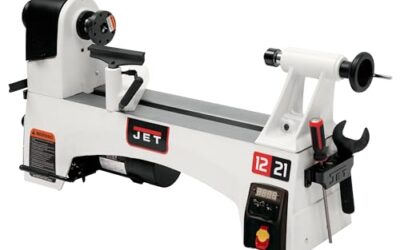
| JET JWL-1221VS Wood Lathe | Serious all-round bowl and spindle turning | Digital readout with 60 to 3600 RPM across three ranges |
| NOVA Comet II DR Midi Lathe | Compact midi turning with a digital display | Digital readout with 250 to 4000 RPM and forward and reverse |
| Delta Industrial 46-460 Midi Lathe | Heavy-duty midi turning and long spindles | Digital readout with 250 to 4000 RPM and a 12-1/2-inch swing |
| RIKON 70-150VSR Midi Lathe | Midi turning with precise speed control | Digital RPM readout with 250 to 3200 RPM and forward and reverse |
How to Choose
Match the speed range to the work you actually do
A lathe earns its keep at the low end as much as at the high end. Roughing an out-of-balance bowl blank calls for a slow, steady turn, often below 500 RPM, while pens and small spindles turn cleanly at 2000 RPM and above. A digital display lets you set those numbers exactly and return to them on the next piece, instead of nudging a dial and guessing by ear. Look for a low end under 300 RPM if you plan to turn green or rough-sawn blanks, and check that the top end reaches at least 3000 RPM for pens and fine finishing cuts.
Check the swing and the distance between centers
Swing is the largest diameter you can turn over the bed, and the distance between centers is the longest spindle you can mount. A 12-inch swing handles most bowls up to about 11 inches across, while a 16-inch distance between centers covers chair legs, rolling pins, and short table legs. If you want longer spindles later, a lathe with an optional bed extension is worth having, since it adds length without replacing the whole machine. Measure the bench space first, because a longer bed needs a longer bench.
Look at the motor and how the speed changes
Electronic variable speed changes the spindle speed with a dial, while belt-and-pulley machines need the cover opened and the belt moved between steps. A digital readout works with either system, but it matters most on electronic machines, where the dial can sit anywhere in a range. A 1 HP motor holds its speed better under a heavy cut than a smaller motor, and torque at low speed is what keeps a big blank turning instead of stalling. Forward and reverse rotation is a real help when sanding, since it smooths the grain from both directions.
Weigh the machine, the bed, and the extras
A lathe that weighs more vibrates less, and cast iron beds are the usual reason a midi lathe feels steady at high speed. Check the weight in the listing and plan the bench around it, since a machine in the 80 to 120 pound range is not something you lift down every weekend. Look at what comes in the box as well: a faceplate, a spur center, a live center, and a tool rest are the minimum for starting work, and a tailstock with a quick-release lever saves time on every setup. Indexing positions help when you want to carve or flute a piece while it is still mounted.
The 4 Best Options
JET JWL-1221VS Wood Lathe
The JET 1221VS is the most capable machine in this guide, and the one to pick when a lathe has to do everything. Its low end of 60 RPM is the slowest here, which makes it the safest choice for roughing large, unbalanced blanks, while the top end of 3600 RPM covers pens and fine detail work. The digital readout sits beside the speed dial on the control panel, so the speed is always visible while you work, and the ratchet belt tension system makes changing between the three ranges a quick job.
Specs
- 12 x 21 inch variable speed wood lathe
- 1 HP motor, 115V
- Variable speed 60 to 3600 RPM in three ranges: 60-900, 110-1800, 220-3600
- Digital readout of spindle speed
- Forward and reverse rotation
- 24 indexing positions
- Ratchet-style belt tension system
- Cast-iron bed and sliding headstock
Best for: Serious all-round bowl and spindle turning in a home shop.
Watch out for: This is the heaviest machine in this guide, so set it on a sturdy bench and plan to leave it there.
NOVA Comet II DR Midi Lathe
The Comet II DR is the compact pick, a midi lathe that fits a small bench and still gives a full digital readout. Its 3/4 HP motor covers the 250 to 4000 RPM range, which is wide enough for bowls, pens, and spindles, and the dial-in speed control with its display screen makes it simple to return to a speed that worked on an earlier piece. The bed extends to 42 inches with an optional accessory, so a short machine can still take on longer spindle work when the project calls for it.
Specs
- 12 inch swing over bed, 16.5 inches between centers
- 3/4 HP electronic variable speed motor, 250 to 4000 RPM
- Digital readout with dial-in speed adjustment screen
- Forward and reverse rotation
- 3 inch faceplate and 6 inch tool rest included
- 2MT spur center and 2MT live center included
- 1 inch x 8 TPI spindle thread
- Optional bed extension to 42 inches
Best for: Compact midi turning in a small shop, with room to grow through a bed extension.
Watch out for: The 3/4 HP motor is the smallest here, so take lighter cuts on large, heavy blanks.
Delta Industrial 46-460 Midi Lathe
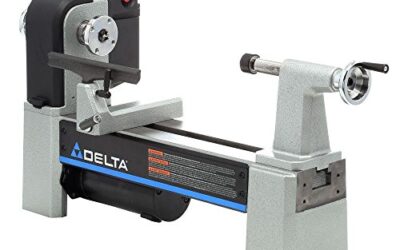
The Delta 46-460 is the heavy-duty midi lathe in this guide, built around a cast-iron frame and a 1 HP motor that holds its speed under load. Its electronic variable speed spans 250 to 4000 RPM across three ranges, and the digital readout lets you repeat an exact speed from one session to the next, which matters when a lid and its box are turned on different days. The 12-1/2-inch swing is the widest here, giving a little extra room for larger bowls, and the patented belt tensioning system keeps range changes simple.
Specs
- 12-1/2 inch swing over bed, 16-1/2 inches between centers
- 1 HP motor, 1725 RPM
- Electronic variable speed 250 to 4000 RPM in three ranges
- Digital speed readout
- Forward and reverse rotation
- 3 inch faceplate, spur center, and ball-bearing live center included
- Patented belt tensioning system
- Cast-iron construction
Best for: Heavy-duty midi turning and long spindles where stability matters.
Watch out for: The listing describes the speed indicator as a digital readout, so confirm the display style on the current listing before ordering.
RIKON 70-150VSR Midi Lathe
The RIKON 70-150VSR is the precision pick, a midi lathe built around a digital RPM readout that shows the speed in both forward and reverse. Its 1 HP DC motor runs from 250 to 3200 RPM across three ranges, and the electronic speed control holds the setting steady while you cut. The pivoting belt cover makes range changes easy, and the included spur center, live center, faceplate, and tool rest mean the machine is ready to turn as soon as it is bolted down.
Specs
- 12 x 16-1/2 inch variable speed midi lathe
- 1 HP DC motor, 6 amps, 120V
- Electronic variable speed 250 to 3200 RPM in three ranges: 250-850, 430-1450, 950-3200
- Digital RPM readout for forward and reverse rotation
- Forward and reverse rotation
- Spur center, live center, 3 inch faceplate, and 6 inch tool rest included
- Pivoting belt cover for easy range changes
- Knock-out bar, wrenches, and tool holder included
Best for: Midi turning where seeing the exact RPM in both directions matters.
Watch out for: Third-party trackers show mixed availability for this model, so confirm the listing is in stock before ordering.
Which One Fits Your Situation
You are setting up a first lathe in a small shop
Pick the NOVA Comet II DR. It is the lightest machine in this guide, it fits on a short bench, and the digital readout teaches good habits from the first day, because you learn which speeds suit which cuts instead of guessing. The optional bed extension means the lathe can grow with you, and the forward and reverse switch makes sanding easier while you are still learning the tools.
You turn bowls from rough, unbalanced blanks
Pick the JET JWL-1221VS. Its 60 RPM low end is the slowest here, and that slow speed is what keeps a rough blank from shaking the bench while you round it. The 1 HP motor and cast-iron bed add stability, and the digital readout lets you raise the speed in small steps as the blank comes round, instead of jumping between fixed belt positions.
You turn pens and spindles and repeat the same settings
Pick the Delta 46-460. The digital readout makes it easy to return to the exact speed that worked last time, which is what pen and spindle work rewards, and the forward and reverse rotation smooths sanding without remounting the piece. The 12-1/2-inch swing also leaves room for a wider bowl when a project grows beyond pens.
You want precise speed control on a midi lathe
Pick the RIKON 70-150VSR. Its digital RPM readout shows the speed in both directions, the electronic control holds the setting under load, and the 1 HP motor gives enough torque for bowls as well as spindles. Check the listing is in stock first, since third-party trackers disagree on availability for this model.
Common Mistakes
- Buying a lathe without a digital display and then guessing speeds by ear on every cut.
- Choosing a lathe with too little swing for the bowls you actually want to turn.
- Ignoring the distance between centers and then finding a table leg will not fit.
- Skipping the check on included accessories and discovering the faceplate or live center is missing.
- Running an unbalanced blank at high speed before rounding it at a slow speed first.
Frequently Asked Questions
What does a digital speed display do on a wood lathe?
A digital speed display shows the spindle speed in RPM on a screen, so you know the exact speed instead of guessing from a dial position or a belt step. Different cuts need different speeds: roughing a blank wants a slow speed, while pens and finishing cuts want a fast one. With a readout you can set the speed and repeat it on the next piece.
What speed should I turn a bowl at?
Start slow and raise the speed as the blank becomes round and balanced. Roughing an out-of-balance blank often starts below 500 RPM, and many turners stay under 800 RPM until the blank is round. Once the bowl is balanced, shaping and finishing can run faster, often between 1000 and 2000 RPM. A digital readout helps because you can note the speed that worked and use it again.
Do I need a bed extension for a midi lathe?
You need one only if you turn long spindles, such as table legs or bed posts, that are longer than the distance between centers. Most bowls, pens, and short spindles fit a standard midi bed of about 16 inches. If longer work is occasional, a lathe with an optional extension, like the NOVA Comet II DR, lets you add length instead of buying a larger machine.
Can a midi lathe turn large bowls?
A midi lathe can turn bowls up to its swing, usually 12 to 12-1/2 inches across, and the bowl needs clearance over the tool rest base. Unbalanced blanks are the hard part: a midi lathe handles them best at slow speeds with light cuts, and a heavier 1 HP machine copes better than a light one. For larger bowls, a full-size lathe is the better tool.
Related guides
More from Amazon
Programs that pair well with the guide above. Offers and eligibility are set by Amazon and may change.
Free shipping on eligible items, Prime Video and more. Eligible new members can start with a free trial.
Start a Prime free trialAudiobooks and podcasts to listen to on the go. Eligible new members can start with a free trial.
Try Audible freeAd-free music streaming. Eligible new subscribers can start with a free trial.
Try Music Unlimited freeA free business account with business pricing and bulk-buying tools for work, shop or home office.
Create a business accountAs an Amazon Associate we earn from qualifying purchases.
Write Your Review
No reviews yet. Be the first to share your experience!