
Key takeaways
- Compare the best midi wood lathes for small professional workshops on swing, bed length, motor power and speed range, from starters to cast-iron machines.
What's inside
As an Amazon Associate I earn from qualifying purchases. This post may contain affiliate links at no extra cost to you.
A midi lathe is the machine that turns a small professional workshop into a place where bowls, spindles and handles leave the bench finished rather than half-shaped. The choice comes down to capacity and control: a lathe with too little swing cannot take the bowl blank you were given, and a lathe with no low speed will tear an out-of-balance blank instead of shaping it. Getting the size and the speed range right matters more than any single feature on the box.
This guide is for professional turners and small-shop owners who need a lathe that earns its bench space every day, from spindle runs for furniture parts to small bowls and handles. Each model below was picked from the names and specifications shown on its Amazon product page, with swing, distance between centers, motor power and speed range compared side by side so the choice rests on published figures rather than showroom talk.
Quick Picks
As an Amazon Associate we earn from qualifying purchases
| Product | Best for | Key spec from title |
|---|---|---|
| WEN 3421 | First lathe for small work | 8-inch swing, 12 inches between centers |
| JET JWL-1015VS | Easy speed changes | 10-inch swing, 200 to 3600 RPM |
| Delta 46-460 | Heavy-duty midi capacity | 12.5-inch swing, 1 HP motor |
| RIKON 70-100 | Simple belt-drive value | 12-inch swing, 16 inches between centers |
How to Choose
Match swing and bed length to your work
Swing is the largest diameter a lathe can turn, and distance between centers is the longest spindle it can hold, so both numbers set hard limits on your work. An 8-inch swing handles pens, handles and small bowls, while a 12-inch swing takes the wider bowls a small shop is often asked for. Bed length matters just as much: a 12-inch bed cannot turn a 15-inch table leg without a bed extension. List the largest piece you expect to turn, then pick a lathe with room to spare. A lathe with a bed extension option gives you a growth path, since you can add length later without replacing the machine.
Look for a wide, usable speed range
Speed control decides whether a blank gets shaped or torn. Roughing an out-of-balance blank needs a slow speed, often below 500 RPM, while sanding and finishing run far faster. Electronic variable speed lets you dial in the exact speed without stopping, and the JET and Delta models here offer three ranges from roughly 200 to 4000 RPM. The RIKON changes speed by moving a belt across stepped pulleys, which works but takes longer. A low minimum speed matters more than a high top speed. Digital readouts help here, since they let you return to the exact speed that worked last time.
Motor power and cast-iron mass
A lathe that bogs down mid-cut leaves tool marks and torn grain, so motor power and machine weight deserve equal attention. A 1 HP motor keeps cutting through dense hardwoods where a third-horsepower motor stalls, and a cast-iron bed absorbs vibration so the tool stays steady. The Delta carries a 1 HP motor on a 97-pound frame, the JET pairs a half-horsepower motor with 72 pounds of cast iron, and the lighter WEN suits small softwood work. Heavier machines also stay put on the bench instead of walking during a heavy cut.
Set up for safe turning
Safe turning starts with the facts on the listing: a low speed range for roughing, a solid way to hold the work, and enough machine weight to stay still. The JET and Delta models include faceplates, centers and tool rests in the box, so a blank can be mounted securely before the motor starts, and their low speed ranges let you true an unbalanced blank slowly. Bolt the lathe to a heavy, level bench, keep the tool rest close to the work, and wear eye protection every time the lathe runs.
The 4 Best Options
WEN 3421

The WEN 3421 is the cheapest way into real variable-speed turning, and it earns its place as a first lathe for small work. Its 3.2-amp motor drives an 8-inch swing and 12 inches between centers, which covers pens, bottle stoppers, small bowls and short spindles, and the variable-speed dial runs from 750 to 3200 RPM with a soft start that eases the motor into motion. Two tool rests, a faceplate and MT1 tapers come in the box, so a beginner can start turning without buying accessories first.
Specs
- Motor: 3.2-amp, about one-third HP
- Capacity: 8-inch swing, 12 inches between centers
- Speed: variable 750 to 3200 RPM with soft start
- Tapers: MT1 spindle and tailstock
- Included: 2.3-inch faceplate, two tool rests, knockout bar
- Weight: 44.7 lb
Best for: A first lathe for pens, handles and small bowls.
Watch out for: The 750 RPM minimum is high for roughing unbalanced blanks, and the light frame needs a solid bench.
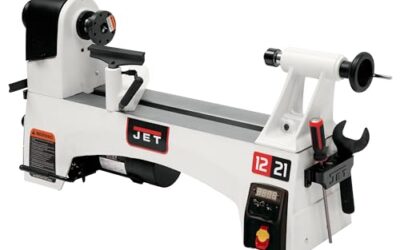
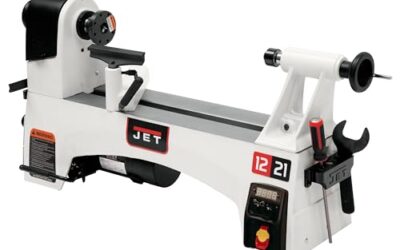
JET JWL-1015VS
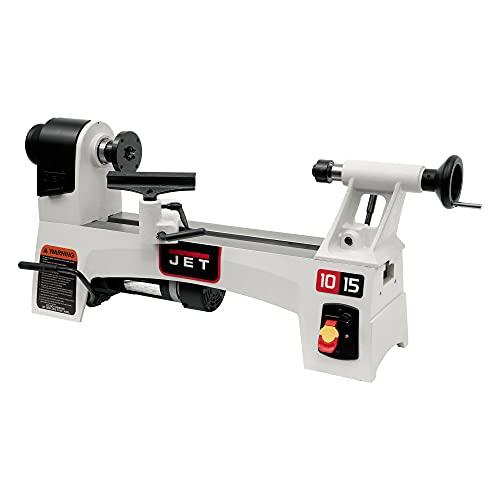
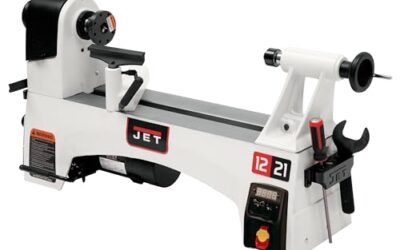
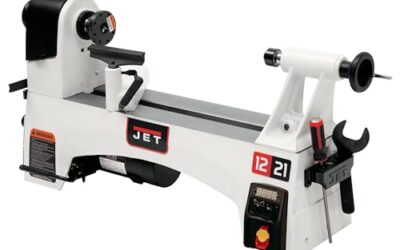
The JET JWL-1015VS is the lathe to buy when speed changes happen all day. An electronic dial adjusts speed inside three belt-selected ranges from 200 to 3600 RPM, so you can slow down for a rough blank and speed up for a thin spindle without stopping to move a belt. The cast-iron bed, headstock and tailstock weigh 72.6 pounds together and damp vibration, the 10-inch swing and 15.5 inches between centers cover bowls and spindles, and a five-year warranty backs the machine.
Specs
- Motor: 1/2 HP, 115V, 4 amps
- Capacity: 10-inch swing, 15.5 inches between centers
- Speed: three ranges, 200-1050, 300-1750, 600-3600 RPM
- Spindle: 1 inch by 8 TPI, MT2 tapers
- Included: live center, spur center, 6-inch tool rest, 3-inch faceplate, knockout rod
- Warranty: 5 years; weight 72.6 lb
Best for: A small shop where speed changes happen constantly.
Watch out for: The 15.5-inch bed needs an extension for longer spindles.
Delta 46-460

The Delta 46-460 is the heaviest hitter in this group, a midi lathe that takes on work other benchtop machines refuse. Its 1 HP motor and 12.5-inch swing handle wide bowl blanks, and three electronic speed ranges run from 250 to 4000 RPM for roughing, shaping and fine finishing. Forward and reverse rotation smooths sanding, the patented belt-tensioning system makes speed changes quick, and the 97-pound cast-iron frame stays planted. A five-year warranty covers the machine.
Specs
- Motor: 1 HP, 120V, 12 amps, 1725 RPM
- Capacity: 12.5-inch swing, 16.5 inches between centers, 42 inches with extension
- Speed: three ranges, 250-700, 600-1800, 1350-4000 RPM
- Spindle: 1 inch by 8 TPI, MT2 tapers, forward and reverse
- Included: 6-inch and 10-inch tool rests, 3-inch faceplate, live center, knockout bar
- Warranty: 5 years; weight 97 lb
Best for: Wide bowls and heavy daily use in a small professional shop.
Watch out for: At 97 pounds it needs a strong bench and two people to move.
RIKON 70-100

The RIKON 70-100 is the simplest machine here, a belt-drive midi lathe that trades electronic speed control for solid castings and a lower parts count. Six stepped-pulley speeds run from 430 to 3900 RPM, and the 12-inch swing with 16 inches between centers covers bowls, spindles and handles. A self-ejecting tailstock and a 12-position indexing head help with drilling and decorative work, and the 88.5-pound frame resists vibration. A five-year warranty backs it.
Specs
- Motor: 1/2 HP, 115V
- Capacity: 12-inch swing, 16 inches between centers
- Speed: six speeds, 430, 810, 1230, 1810, 2670, 3900 RPM
- Spindle: 1 inch by 8 TPI, MT2 tapers
- Included: self-ejecting tailstock, 12-position index head, 8-inch tool rest
- Warranty: 5 years; weight 88.5 lb
Best for: Turners who want simple belt-drive reliability at a midi size.
Watch out for: Speed changes need the cover opened and the belt moved by hand.
Which One Fits Your Situation
For a first lathe for pens and small spindles
Pick the WEN 3421. Its variable-speed dial and soft start make learning speed control forgiving, and the compact frame fits a bench that already holds other tools. The 8-inch swing covers pens, stoppers and small handles, and the included tool rests and faceplate mean no extra purchases before the first turning session.
For bowls and wider blanks in a small shop
Pick the Delta 46-460. The 12.5-inch swing takes bowl blanks the smaller lathes cannot, and the 1 HP motor keeps cutting through dense hardwoods. The 4000 RPM top speed finishes thin work cleanly, and forward and reverse rotation smooths sanding without removing the piece from the lathe. The extra swing also leaves room for faceplate work on shallow platters. The 97-pound frame stays steady during heavy roughing cuts.
For production spindle runs
Pick the JET JWL-1015VS. The electronic speed dial changes speed mid-cut, so a run of chair legs or balusters moves faster than on a belt-change machine. The cast-iron frame damps vibration across a long run, and the 24-position indexing head supports evenly spaced decorative cuts on every piece in the batch.
For a shared workshop with limited bench space
Pick the RIKON 70-100. Its 12-inch swing and 16 inches between centers cover most small-shop work in a footprint that leaves room for other benches, and the simple belt drive has fewer parts to fail when several people share the machine. The self-ejecting tailstock speeds up bit changes between turners each day.
Common Mistakes
- Buying on top speed alone and ignoring the low end, so roughing an unbalanced blank becomes dangerous.
- Choosing a bed too short for the longest spindle you turn, then needing an extension you did not budget for.
- Setting the tool rest far from the work, which lets the chisel catch and kick.
- Skipping the faceplate or chuck check, so a bowl blank works loose mid-cut.
- Mounting a heavy lathe on a light bench, which lets vibration ruin the finish and walk the machine.
Frequently Asked Questions
What size midi lathe do I need for a small professional workshop?
Match swing and bed length to the largest piece you turn. An 8-inch swing covers pens and small handles, while a 12-inch swing takes bowls and wider blanks. For spindles, check the distance between centers against your longest leg or baluster, and remember that a bed extension can add length later if the lathe supports one.
Is variable speed worth it on a midi lathe?
Yes, for most professional work. Variable speed lets you start slow on an unbalanced blank, then raise the speed for shaping and finishing without stopping to move a belt. Belt-change lathes like the RIKON work well and cost less, but every speed change interrupts the cut and slows a production run.
How much motor power does a midi lathe need?
A half-horsepower motor handles pens, spindles and small bowls in softwood and mild hardwoods. For wide bowls, dense hardwoods and daily professional use, a 1 HP motor like the Delta keeps cutting without bogging down. Power matters less than technique for light work, but a stalling motor leaves tool marks that take time to sand out.
Can a midi lathe handle bowl turning?
A midi lathe handles bowls up to its swing, so a 12-inch midi turns bowls up to 12 inches across, which covers most small-shop bowl work. Full-size lathes suit larger bowls and longer spindles, but they need far more floor space. If your bowls stay under 12 inches, a midi lathe does the job on a benchtop.
Related guides
More from Amazon
Programs that pair well with the guide above. Offers and eligibility are set by Amazon and may change.
Free shipping on eligible items, Prime Video and more. Eligible new members can start with a free trial.
Start a Prime free trialAudiobooks and podcasts to listen to on the go. Eligible new members can start with a free trial.
Try Audible freeAd-free music streaming. Eligible new subscribers can start with a free trial.
Try Music Unlimited freeA free business account with business pricing and bulk-buying tools for work, shop or home office.
Create a business accountAs an Amazon Associate we earn from qualifying purchases.
Write Your Review
No reviews yet. Be the first to share your experience!