
Key takeaways
- Five portable plasma cutters for home fabrication, compared on pilot-arc type, dual-voltage input, clean-cut capacity and duty cycle — from a 50A garage staple to a 65A dual-voltage unit.
What's inside
As an Amazon Associate I earn from qualifying purchases. This post may contain affiliate links at no extra cost to you.
A portable plasma cutter is the tool that turns a home fabrication shop from “cut it with a grinder and hope” into clean, fast, repeatable metalwork. Trailer repairs, brackets, patch panels, gates, art pieces — once you can slice mild steel, stainless and aluminium with a hand torch, projects that used to stall at the cutting stage start moving. The good news is that the current generation of inverter machines is small enough to carry in one hand, runs on ordinary household power at reduced output, and starts the arc without dragging the tip across the workpiece.
The five machines below were chosen for home and garage fabrication specifically. Every one is a portable inverter unit sold on Amazon US, every one offers a pilot arc so you can start on rusty, painted or expanded metal, and every one runs on dual 110V/220V input so it can work on a household outlet today and a dedicated 220V circuit later. They differ in the ways that actually matter at the bench: maximum output, how much of that output survives on 110V, clean-cut capacity, duty cycle, and whether the box is a dedicated cutter or a multi-process combo.
If you only read one line: the LOTOS LTP5000D is the default recommendation for most home shops, and the YESWELDER CUT-65DS PLUS is the pick when you have 220V power and want the most cutting capacity in this group.
Quick Picks
As an Amazon Associate we earn from qualifying purchases.
| Pick | Output | Pilot arc | Clean cut | Standout trait |
|---|---|---|---|---|
| LOTOS LTP5000D | 50A | Non-touch | 1/2 in | The proven home-garage standard |
| LOTOS LTPDC2000D | 50A plasma | Non-touch | 1/2 in | Plasma, TIG and stick in one combo box |
| YESWELDER CUT-65DS PLUS | 65A | Non-touch, blowback start | 5/8 in at 220V | Most cutting power here |
| bestarc BTC500DP | 50A | Pilot arc (HF type) | 1/2 in | Digital display on a budget machine |
| YESWELDER CUT-60DS PRO | 60A | Non-touch, blowback start | See listing | Non-HF start that is gentle on shop electronics |
How to Choose
Pilot arc type decides what you can start on
A pilot arc lets the torch establish an arc before it touches the metal, which is what makes cutting rusty, painted, dirty or perforated stock practical — the arc starts in the air and transfers to the workpiece instead of scratching and stuttering. Within pilot-arc machines there are two start types worth separating. Non-touch blowback designs start the arc mechanically inside the torch and produce no high-frequency burst, so they are the safer choice around CNC electronics, vehicle ECUs and other sensitive equipment in the shop. High-frequency (HF) start machines, like the bestarc in this list, also give you a true pilot arc, but the HF burst can interfere with nearby electronics, so placement and distance matter more.
Match the machine to the power you actually have
Every machine here is dual voltage, but dual voltage does not mean equal output on both inputs. The LOTOS LTP5000D delivers 10–35A on 110V and the full 10–50A on 220V; the YESWELDER CUT-65DS PLUS runs 15–45A on 110V and 15–65A on 220V. In practice, a 110V outlet is fine for sheet, thin plate and most repair work, while the headline clean-cut figures are 220V figures. Before ordering, check what plug the machine ships with: the LTP5000D arrives fitted for 220V, and running it on 110V needs a separate adapter pigtail that is not in the box.
Read clean cut and severance as two different numbers
Manufacturers quote two thicknesses. The clean-cut figure is the thickness the machine can cut at a reasonable travel speed with a tidy edge — that is the number to plan projects around. The severance figure is the maximum it can push through slowly, with a rougher edge you will need to grind. A cutter rated at 1/2 in clean cut and 3/4 in severance is a 1/2 in machine for real work. Also note that clean-cut capacity drops on 110V input: the CUT-65DS PLUS is rated 5/8 in clean at 220V but 5/16 in at 110V.
Duty cycle tells you how the machine behaves mid-project
Duty cycle is the share of a ten-minute period a cutter can run at a stated output before it needs to rest. A 60 percent duty cycle at full output — the figure both LOTOS machines and the CUT-65DS PLUS carry — means six minutes of arc time in ten at maximum amps, which is generous for home fabrication where cuts are usually short and interrupted by measuring and fitting. If a listing does not state a duty cycle at all, treat that as missing information rather than assuming the best, and check the product page before buying.
The 5 Best Options
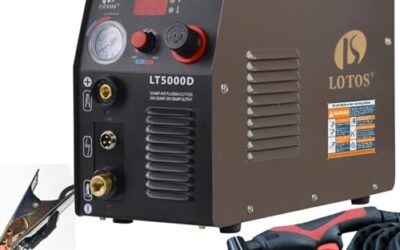
1. LOTOS LTP5000D 50A Plasma Cutter

The LTP5000D is the machine that defined this category for home shops: a dedicated, single-purpose plasma cutter (not a combo) built around a 50A inverter and a non-touch pilot arc. It has been the default answer to “what should I buy for the garage” for years because the specification lines up exactly with home fabrication work — thick enough for trailer and frame repairs, gentle enough to run in a residential garage.
Specs
- Output: 50A maximum (10–35A on 110V, 10–50A on 220V)
- Pilot arc: non-touch
- Input: 110/220V dual voltage; fitted with a 220V plug
- Clean cut: 1/2 in; severance: 3/4 in
- Duty cycle: 60 percent at 50A
Best for: The classic home-fabrication setup — one dedicated cutter that starts reliably on rusty or painted steel and handles the plate thicknesses home projects actually use.
Watch out for: The 110V adapter pigtail (PT01) is sold separately, so budget for it if your shop only has household outlets. This is also a long-running design; check the listing carefully so you receive the current unit.
View the LOTOS LTP5000D on Amazon
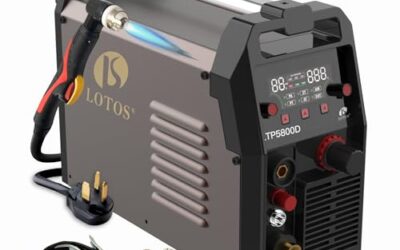
2. LOTOS LTPDC2000D 3-in-1 Plasma Cutter, TIG and Stick Combo
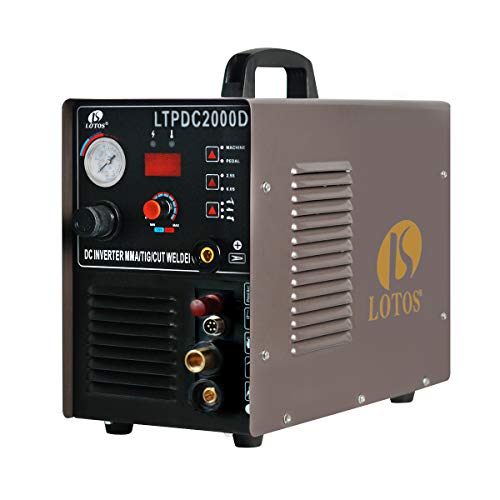
The LTPDC2000D puts three processes in one portable box: a 50A plasma cutter with a non-touch pilot arc, a 200A DC TIG welder and a 200A stick welder. That makes it a combo machine rather than a dedicated cutter, and it should be judged that way — the appeal is not that it out-cuts the LTP5000D, but that one unit on the bench covers cutting and the two welding processes most home fabricators use.
Specs
- Plasma output: 50A
- Pilot arc: non-touch
- Input: 110V/220V dual voltage
- Clean cut: 1/2 in (conservative figure; some listing versions quote higher)
- Duty cycle: 60 percent at maximum amps
- Also includes: 200A DC TIG and 200A stick welding
Best for: Home fabricators who also weld and want cutting, TIG and stick in a single portable unit instead of three separate machines.
Watch out for: Because it is a combo, setup and consumables differ per process, and some listing versions of this model quote a 5/8 in clean cut while the manufacturer’s spec table lists 1/2 in — plan around the 1/2 in figure. If you never weld, the dedicated LTP5000D above is the simpler buy.
View the LOTOS LTPDC2000D on Amazon
3. YESWELDER CUT-65DS PLUS Plasma Cutter
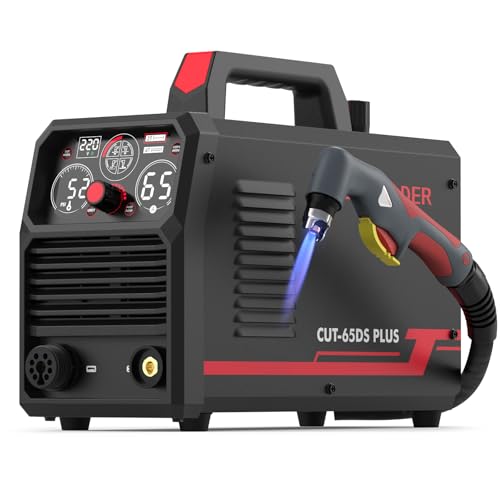
The CUT-65DS PLUS is the strongest cutter in this group. Its 65A output and 5/8 in clean-cut capacity at 220V move it from “home repair” territory into genuinely capable fabrication, and it still throttles back to a 110V mode for lighter work. The start system is a non-touch pilot arc with a blowback, non-high-frequency start, so it lights on painted and rusty stock without spraying HF interference around the shop. Four working modes — plate cutting, grid cutting, gouging and marking — plus dual digital displays round out a specification aimed at people who cut often.
Specs
- Output: 65A maximum (15–45A on 110V, 15–65A on 220V)
- Pilot arc: non-touch, blowback (non-high-frequency) start
- Input: 110/220V dual voltage
- Clean cut: 5/8 in at 220V (5/16 in at 110V); severance: 63/64 in at 220V
- Duty cycle: 60 percent at 65A
- Modes: plate cutting, grid cutting, gouging, marking; dual digital displays
Best for: Fabricators with a 220V circuit who want the most cutting capacity in this list while keeping a usable 110V mode for thinner work.
Watch out for: This is the PLUS model — do not confuse it with the older CUT-65DS, which is a different listing. And remember the headline cut figures are 220V figures; on a household outlet the clean cut drops to 5/16 in.
View the YESWELDER CUT-65DS PLUS on Amazon
4. bestarc BTC500DP Pilot Arc Plasma Cutter
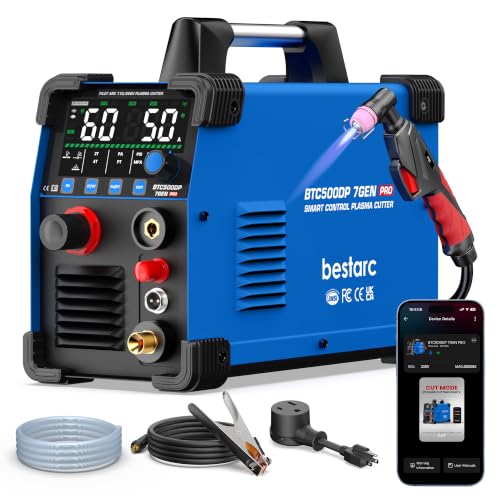
The BTC500DP is the budget route into pilot-arc cutting: a 50A machine with a large LED display, an air sensor, 2T/4T torch control and adjustable post-flow — features that make day-to-day cutting easier to dial in. Its pilot arc is the high-frequency type used across this model family, which starts the arc without contact but deserves more care around sensitive electronics than the blowback designs above.
Specs
- Output: 50A
- Pilot arc: yes (HF type on this model family)
- Input: 110/220V dual voltage
- Clean cut: 1/2 in; max cut: 3/4 in
- Display: large LED, with air sensor, 2T/4T and post-flow
Best for: Budget-minded home users who want a pilot-arc machine with a clear digital display and torch-control options.
Watch out for: bestarc sells this model name under different listings by generation, and the figures quoted by other generations differ — make sure the listing you buy is this BTC500DP unit. The sources for this model do not state a duty cycle, so check the product page if sustained cutting at full output matters to you.
View the bestarc BTC500DP on Amazon
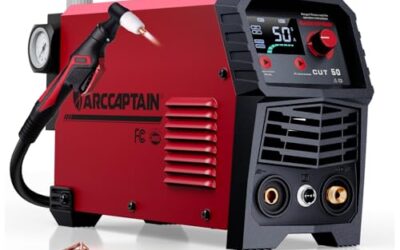
5. YESWELDER CUT-60DS PRO Plasma Cutter

The CUT-60DS PRO sits in the 60A class with the same non-high-frequency blowback start philosophy as its bigger sibling: a non-touch pilot arc that starts without an HF burst, so it can work near vehicle electronics and shop computers with less worry. It runs on dual 110/220V input, shows its settings on a digital display, and ships around an IPT40 torch platform, a widely supported torch style for consumables.
Specs
- Output: 60A
- Pilot arc: non-touch, non-high-frequency blowback start
- Input: 110/220V dual voltage
- Display: digital
- Torch: IPT40
Best for: Buyers who specifically want the non-HF blowback start — no interference with shop electronics — in a 60A-class portable unit.
Watch out for: The sources for this model do not confirm a duty cycle or a clean-cut thickness, so verify both on the product page before ordering if they matter to your projects. Describe and compare it by its listed name; the listing’s internal part-number fields are inconsistent.
View the YESWELDER CUT-60DS PRO on Amazon
Which One Fits Your Situation
You only have household 110V outlets
Start with the LOTOS LTP5000D and order the PT01 pigtail at the same time, since it is not included. Expect up to 35A of output on 110V — plenty for sheet metal, thin plate, exhaust work and most repair cuts. The CUT-65DS PLUS is the alternative if you plan to add a 220V circuit later, because its 110V mode still offers up to 45A today.
You cut and weld in the same small shop
The LOTOS LTPDC2000D is the only combo here, and for a one-bench garage it is a rational trade: 50A pilot-arc plasma cutting plus 200A DC TIG and 200A stick in one portable box. Judge it as three adequate tools in one case rather than a best-in-class cutter.
You have 220V and cut thicker stock regularly
The YESWELDER CUT-65DS PLUS is the clear pick: 65A, a 5/8 in clean cut and a 60 percent duty cycle at full output. It is the only machine here whose clean-cut capacity reaches beyond 1/2 in, and the gouging and grid modes earn their keep on fabrication work.
You want the gentlest start around electronics
Choose between the CUT-65DS PLUS and the CUT-60DS PRO — both use non-touch blowback starts with no high-frequency burst. Pick the PLUS for its fully documented cut figures, or the PRO if the 60A class and IPT40 torch suit you and you are comfortable confirming its unstated figures on the product page.
You are equipping a first shop on a tight budget
The bestarc BTC500DP covers the fundamentals — 50A, pilot arc, dual voltage, 1/2 in clean cut — with a display that makes setup friendlier. Just confirm you are looking at the correct generation’s listing before ordering.
Common Mistakes
Planning projects around the severance number. Severance is a slow, rough maximum. If your material is 5/8 in plate, a machine with a 1/2 in clean cut and 3/4 in severance will technically get through it — slowly, with an edge you will grind for a long time. Buy for the clean-cut figure.
Assuming dual voltage means full power everywhere. On 110V, these machines run at reduced amperage and reduced cut capacity. The CUT-65DS PLUS drops from a 5/8 in clean cut at 220V to 5/16 in at 110V. Match the machine to the circuit you really have.
Forgetting the adapter and the air supply. The LTP5000D needs a separately sold pigtail for 110V use, and every plasma cutter here needs a supply of clean, dry compressed air to cut at all. Neither belongs in the “surprise” category — check both before the machine arrives.
Buying the wrong generation of the same model name. Some brands, bestarc included, sell the same model name under different listings as generations change, with different specifications. Confirm the exact unit on the product page rather than relying on the model name alone.
Treating an unstated duty cycle as a high one. Two machines in this list do not publish a duty cycle in the sources checked. For short home-fabrication cuts that rarely matters, but for long production-style cutting runs it does — verify before you buy, not after the thermal cutout teaches you.
FAQ
Can a portable plasma cutter really run on a household outlet?
Yes, within limits. All five machines here accept 110V input, but output drops — the LTP5000D tops out at 35A on 110V against 50A on 220V, and clean-cut capacity falls with it. Household power is fine for sheet and thin plate; thicker fabrication work is what the 220V mode is for.
What is the difference between a non-touch pilot arc and an HF start?
Both start the arc without dragging the tip on the metal, so both work on rusty, painted or perforated stock. A blowback (non-high-frequency) start creates the pilot arc mechanically inside the torch and emits no HF burst, which is safer around CNC controls and vehicle electronics. An HF start uses a high-frequency burst to establish the arc — effective, but worth keeping away from sensitive equipment.
How thick can a 50A plasma cutter cut?
In this group, the 50A machines are rated at a 1/2 in clean cut with a 3/4 in severance maximum. That covers the large majority of home fabrication material. If you regularly work above 1/2 in, step up to the 65A CUT-65DS PLUS and its 5/8 in clean-cut capacity on 220V.
Do I need anything besides the cutter itself?
Yes: a compressor supplying clean, dry air, the right torch consumables for your torch model, and proper protective gear — a welding helmet with a suitable shade, gloves and eye protection. If you plan to run a dual-voltage machine on 110V, check whether the adapter for your outlet is included; on the LTP5000D it is a separate purchase.
Related guides
More from Amazon
Programs that pair well with the guide above. Offers and eligibility are set by Amazon and may change.
Free shipping on eligible items, Prime Video and more. Eligible new members can start with a free trial.
Start a Prime free trialAudiobooks and podcasts to listen to on the go. Eligible new members can start with a free trial.
Try Audible freeAd-free music streaming. Eligible new subscribers can start with a free trial.
Try Music Unlimited freeA free business account with business pricing and bulk-buying tools for work, shop or home office.
Create a business accountAs an Amazon Associate we earn from qualifying purchases.
Write Your Review
No reviews yet. Be the first to share your experience!