
Key takeaways
- Find the best portable plasma cutters for trade workshops with dual-voltage power, pilot arc cutting, and compact frames built for daily shop work.
What's inside
As an Amazon Associate I earn from qualifying purchases. This post may contain affiliate links at no extra cost to you.
Introduction
A portable plasma cutter earns its place in a trade workshop by cutting metal cleanly wherever the work happens to be. In a busy shop, the metal rarely comes to the machine. A bracket needs trimming at the far bench, a plate needs a notch cut beside a vehicle, or a repair job calls for cutting outdoors near a gate. A heavy fixed cutter stays in one corner. A portable cutter travels with a handle or a shoulder strap, and it keeps working through a full day of varied jobs.
The best portable plasma cutters for trade workshops balance cutting power with practical limits. They run from the power a workshop already has, they work with the air supply a workshop already owns, and they are light enough for one person to carry without help. They also cut the thicknesses a trade workshop meets most often: sheet metal, plate for brackets and frames, and stock for repairs and fabrication. A cutter that only handles thin sheet will stall on plate work, while an oversized industrial unit defeats the point of portability.
The four cutters below were chosen for trade workshop use. Each one is a portable plasma cutter sold on Amazon US, with dual-voltage input and a compact frame.
How to Choose a Portable Plasma Cutter for a Trade Workshop
Choosing a portable plasma cutter begins with the metal you cut. List the materials and thicknesses that appear in a normal week. Mild steel is the most common workshop metal, followed by stainless steel and aluminium. A 50 amp cutter handles sheet and plate up to around half an inch on suitable steel at full power, while a 60 amp cutter adds headroom for thicker plate and faster cutting on mid-range stock. A 30 amp cutter suits thin sheet and light repair work, but it will struggle with the plate work that fills many trade workshops. Match the amperage to the thickest metal you cut regularly, not the thickest piece you have ever cut once.
Power input is the next decision. Most portable cutters in this guide accept both 110 volt and 220 volt input, which is a real advantage in a trade workshop. A standard outlet runs the machine at reduced output for thinner metal, while a 220 volt circuit unlocks full output for thicker plate. Check which outlets are available near the benches where cutting happens, and check whether a suitable adapter is included with the machine. A cutter that needs a circuit you do not have will sit unused, however capable it looks on paper.
Air supply is just as important as power. Plasma cutters need clean, dry compressed air, and the compressor is almost always sold separately. Check the air flow and pressure the cutter asks for, then compare those figures with your compressor. A small compressor may keep up with short cuts on thin sheet but fall behind during long cuts on plate. A larger shop compressor with a dryer or filter gives steadier results and longer consumable life. A built-in air regulator and gauge on the cutter helps, because the operator can set and check pressure at the machine instead of walking back to the compressor.
Pilot arc is worth understanding before you buy. A pilot arc cutter can hold an arc without touching the metal, which helps with painted, rusted, expanded, or perforated stock. A non-touch pilot arc design is common in portable workshop cutters because it handles dirty metal well and reduces tip wear from repeated contact. If your workshop cuts a lot of used steel, salvaged plate, or mesh, pilot arc capability should sit near the top of your list.
Weight and size decide whether a cutter is truly portable. A machine around 13 pounds can be carried one-handed to a job, while a heavier unit still counts as portable if it has a strong handle and a compact frame.
Controls and display affect daily use. A large LED display that shows amperage clearly helps when several people share a machine. Simple modes, such as two-trigger and four-trigger operation, let the operator choose between a short cut with a held trigger and a longer cut without holding the trigger down. Post-flow cooling, where air keeps flowing briefly after the cut, helps cool the torch and extend consumable life.
Top Picks
ARCCAPTAIN CUT50 Plasma Cutter
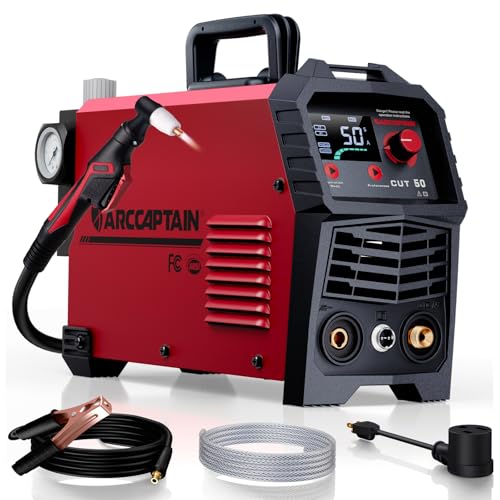
The ARCCAPTAIN CUT50 is a 50 amp portable plasma cutter built around a dual-voltage inverter, and it is the lightest machine in this guide at 13 pounds. Its compact frame measures 13 by 6 by 8 inches, and a shoulder strap is included, so one person can carry it to a bench, a vehicle bay, or a job elsewhere in the workshop. For a trade workshop that needs a cutter to move between jobs rather than stay fixed at one station, that low weight is a practical advantage.
The CUT50 runs from 110 volt or 220 volt input. On 110 volt input the display range is 20 to 35 amps, while on 220 volt input the range is 20 to 50 amps. That split matters in daily work: thin sheet can be cut from a standard outlet, while thicker plate calls for the higher-voltage circuit and full output. The listed clean cut is half an inch on suitable material at full power, with thicker severance possible depending on setup and material. The listing gives a maximum cutting thickness of 12 mm at 35 amps on 110 volt input and 18 mm at 50 amps on 220 volt input, both with specified air pressure.
A large LED display shows the working setting clearly, and the machine includes 2T and 4T trigger modes plus post-flow cooling. The built-in air regulator and gauge let the operator set pressure at the machine, and the cutter is listed as compatible with standard air compressors at 5.3 CFM. Compressed air is required and the compressor is sold separately. The torch uses the PT31 type, a common consumable family, which helps when ordering spares.
bestarc BTC500DP 9GEN Plasma Cutter

The bestarc BTC500DP 9GEN is a 50 amp pilot arc plasma cutter with dual-voltage input and a screen display, and it is built for workshops that cut painted, rusted, or mesh material as well as clean plate. The pilot arc is the defining feature here. Because the arc can hold without constant contact with the metal, the cutter keeps working on stock that would interrupt a contact arc, including expanded metal and perforated sheet. For a trade workshop that handles repair work and salvaged steel, that capability saves time and reduces frustration.
The BTC500DP 9GEN runs from 110 volt or 220 volt input and uses an IGBT inverter design. The listing names a clean cut of half an inch on suitable material, with a maximum cut of four fifths of an inch depending on setup. A digital display shows the working setting, and the machine includes 2T and 4T trigger modes with post-flow cooling. The air sensor feature on this generation helps the operator confirm that air is flowing before cutting, which protects consumables and improves cut quality when the air supply varies.
The machine is compact for a 50 amp pilot arc unit, and the layout keeps the torch connection, ground clamp, and air fitting within easy reach. The included accessories cover the torch, ground clamp, air hose, and fittings needed to connect to a workshop compressor.
PRIMEWELD CUT60 Plasma Cutter

The PRIMEWELD CUT60 is a 60 amp plasma cutter with a non-touch pilot arc and a PT60 torch, and it is the most powerful machine in this guide. The higher output gives it more headroom on thicker plate, and the continuous pilot arc lets it cut expanded, rusted, and painted metals without losing the arc. For a trade workshop that regularly cuts plate above half an inch, or that wants faster cutting on mid-range stock, the extra amperage is worth the larger frame and higher draw.
The CUT60 runs from 110 volt or 220 volt input with an adapter, and it uses blow-back arc technology with a PT60 blow-back cutting torch and a Euro central connection. The listing names a three year warranty and a listed duty cycle at 60 amps, which reflects its design for sustained workshop use. A CNC port is included, so the machine can also serve a cutting table later if the workshop adds one. That flexibility matters for a trade workshop that may grow from hand cutting into table cutting over time.
The control panel is straightforward, with a digital display, a main control dial, and a pressure gauge. The torch lead and ground clamp are sized for workshop use, and the machine includes the fittings needed to connect to a shop air supply. The CUT60 needs a compressor that can sustain its air demand during longer cuts, so a workshop with a larger compressor will get the best from it.
YESWELDER CUT-55DS PRO Plasma Cutter

The YESWELDER CUT-55DS PRO is a 55 amp plasma cutter with a non-high-frequency, non-touch pilot arc and a large LED digital display, and it sits between the 50 amp and 60 amp machines in this guide on output. That middle position is useful: it gives more cutting headroom than a 50 amp unit for plate work, while keeping a compact frame that is easy to move around a workshop. The non-high-frequency design avoids interference with nearby electronics, which can matter in a workshop with other sensitive equipment.
The CUT-55DS PRO runs from 110 volt or 220 volt input through a DC inverter, and the large LED display shows the amperage setting clearly. The non-touch pilot arc helps with painted, rusted, and perforated stock, and the machine includes a built-in air regulator. The listing names the model as CUT-55DS PRO, with the part number CUT-55DS Pro NEW1, and the maker is YESWELDER. The torch, ground clamp, and air hose are included, and the machine connects to a standard workshop compressor.
At 55 amps, this cutter handles sheet and plate work across the range a trade workshop meets most often, and the pilot arc keeps it working on stock that is not clean. The digital display and simple controls make it easy to set up for different thicknesses, and the compact size means it can sit on a bench or a cart without taking over the workspace.
Comparison Table
| Product | Key Feature | Best For |
|---|---|---|
| ARCCAPTAIN CUT50 | 50 amp dual-voltage inverter, 13 pounds, large LED display | Light and portable cutting, sheet and mid-range plate |
| bestarc BTC500DP 9GEN | 50 amp pilot arc, dual-voltage, screen display, air sensor | Painted, rusted, and mesh stock, mixed repair work |
| PRIMEWELD CUT60 | 60 amp non-touch pilot arc, PT60 torch, CNC port | Thicker plate, heavier daily fabrication |
| YESWELDER CUT-55DS PRO | 55 amp non-high-frequency pilot arc, large LED display | Balanced plate cutting, clear controls, compact frame |
Buying Guide
Start with a clear picture of your workshop before comparing machines. Write down the thickest mild steel plate you cut in a normal week, the thinnest sheet you cut, and the other metals that appear, such as stainless steel or aluminium. Then write down the power outlets near your cutting area and the capacity of your compressor. A cutter chosen against those facts will serve you better than a cutter chosen on amperage alone.
Amperage and cut capacity should be checked together. A higher amperage number does not guarantee a cleaner cut on thin sheet, because thin metal needs a lower setting and a steady hand. A lower amperage cutter set correctly will cut thin sheet with less distortion than a powerful machine run too hot. For plate work, the opposite applies: a cutter run near its limit will cut slowly and wear consumables faster. Choose a machine whose comfortable range covers the thicknesses you cut most, with some headroom for the thicker jobs that appear from time to time.
Air quality deserves the same attention as amperage. Clean, dry air extends consumable life and improves cut quality, while wet or oily air causes rough cuts and rapid tip wear. If your workshop air has moisture problems, add a filter or dryer at the compressor or near the cutter. Check the air hose for leaks, and keep the pressure within the range the cutter asks for. Too little pressure gives a weak arc, while too much pressure can blow the arc and waste air.
Torch and consumable choice affect running costs. The PT31 torch family on the ARCCAPTAIN CUT50 and the PT60 torch on the PRIMEWELD CUT60 use consumables that are widely listed, which helps when ordering spares. Keep a small stock of tips and electrodes in the workshop, and change them when cut quality falls rather than waiting for a complete failure. A worn tip causes a wider kerf, more dross, and a rougher edge, and it can also damage the torch if left too long.
Safety and setup belong in the buying decision, not after it. Plasma cutting produces bright light, hot metal, sparks, and fumes, so a proper helmet, gloves, and protective clothing are essential, along with ventilation or extraction in the cutting area. Keep flammable material away from the cutting zone, and make sure the ground clamp has a clean connection to the workpiece.
Duty cycle describes how long a machine can cut within a set period before it needs to cool. In practice, most trade workshop cutting happens in short runs with pauses for measuring, marking, and moving metal, so a moderate duty cycle is enough for many shops.
Finally, check what is included and what is not. A plasma cutter package usually includes the machine, torch, ground clamp, air hose, and a power adapter where needed. A compressor, cutting table, helmet, and consumable spares are usually separate.
Frequently Asked Questions
What size plasma cutter does a trade workshop need?
Most trade workshops are well served by a 50 amp or 55 amp portable cutter, because that range covers sheet and plate up to around half an inch on suitable steel at full power. A 60 amp cutter adds headroom for thicker plate and faster cutting on mid-range stock.
Do portable plasma cutters need a separate air compressor?
Yes, in almost every case. The cutters in this guide need clean, dry compressed air, and the compressor is sold separately. Check the air flow and pressure each cutter asks for, then compare those figures with your compressor. A larger shop compressor with a filter or dryer gives steadier results and longer consumable life than a small compressor working at its limit.
Can a portable plasma cutter cut rusted or painted steel?
A pilot arc cutter can, because the arc holds without constant contact with clean metal. The bestarc BTC500DP 9GEN, the PRIMEWELD CUT60, and the YESWELDER CUT-55DS PRO all use a non-touch pilot arc design for this reason. Clean the ground clamp connection and the area near the cut where possible, and expect consumable wear to rise on dirty stock. A contact arc cutter will struggle more on coated or rusted metal.
Is dual-voltage input important in a trade workshop?
Dual-voltage input is useful because it lets one machine run from a standard outlet at reduced output and from a higher-voltage circuit at full output. That flexibility matters when cutting moves between benches, bays, and outdoor areas with different power available. Check which outlets are near your cutting area and whether the machine includes the adapter you need.
Conclusion
The best portable plasma cutter for a trade workshop is the one that matches the metal, power, and air supply you already have, and that is easy enough to move that it gets used every day. The ARCCAPTAIN CUT50 is the lightest choice here, and it suits shops that move the cutter between jobs and cut mostly sheet and mid-range plate. The bestarc BTC500DP 9GEN adds pilot arc cutting for painted, rusted, and mesh stock, which makes it a strong fit for repair and maintenance work. The PRIMEWELD CUT60 brings 60 amps and a CNC port for heavier plate and for workshops that may add a cutting table later. The YESWELDER CUT-55DS PRO sits in the middle on output, with a clear display and pilot arc cutting in a compact frame.
Before buying, confirm the thickness you cut most, the outlets near your cutting area, and the capacity of your compressor. Check the torch type and consumable availability, and make sure the safety gear and ventilation in your workshop are ready for plasma cutting.
Disclosure: As an Amazon Associate, we earn from qualifying purchases.
Related guides
More from Amazon
Programs that pair well with the guide above. Offers and eligibility are set by Amazon and may change.
Free shipping on eligible items, Prime Video and more. Eligible new members can start with a free trial.
Start a Prime free trialAudiobooks and podcasts to listen to on the go. Eligible new members can start with a free trial.
Try Audible freeAd-free music streaming. Eligible new subscribers can start with a free trial.
Try Music Unlimited freeA free business account with business pricing and bulk-buying tools for work, shop or home office.
Create a business accountAs an Amazon Associate we earn from qualifying purchases.
Write Your Review
No reviews yet. Be the first to share your experience!